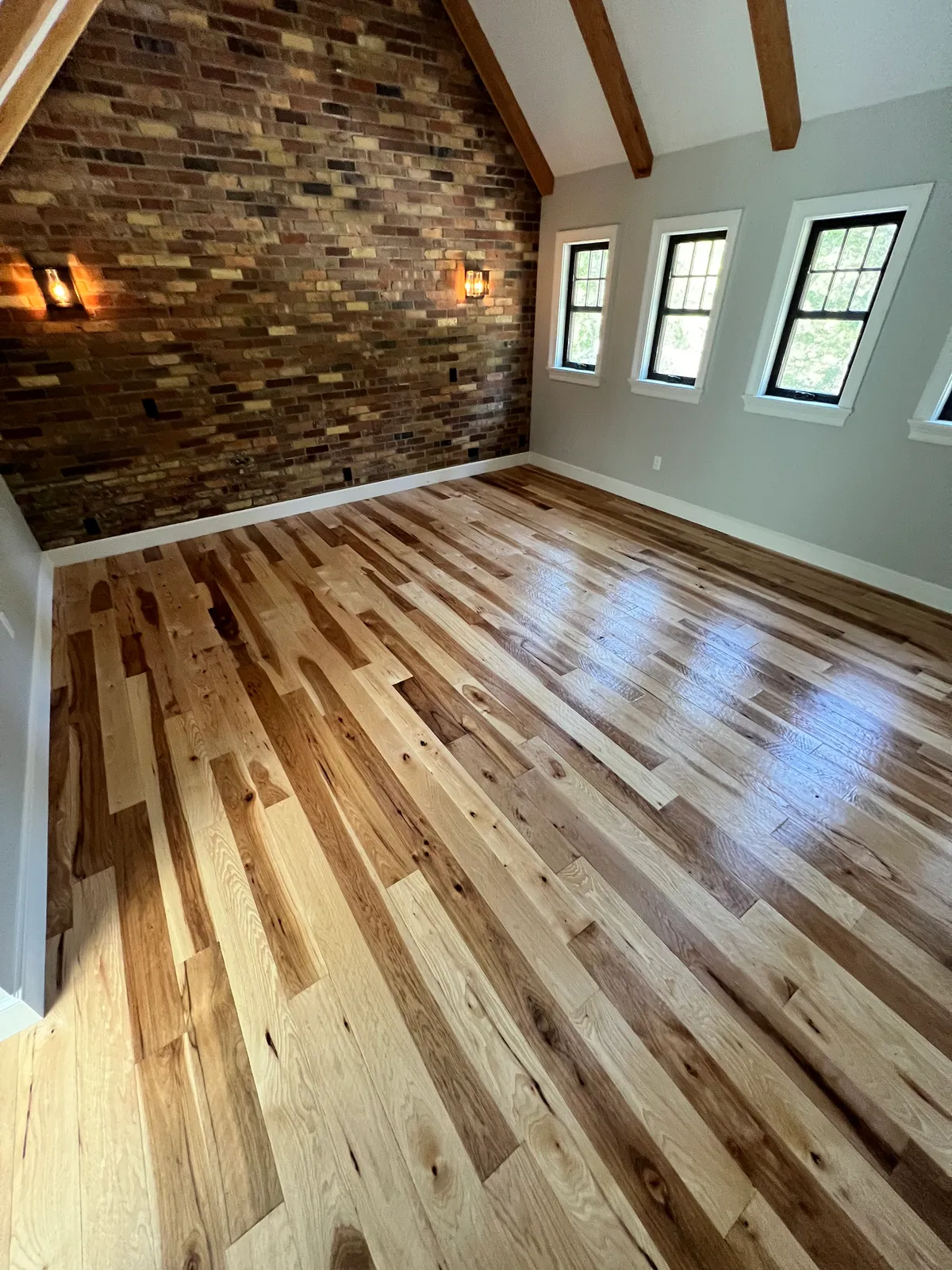
Engineered hardwood can sometimes be refinished, but not always. The answer depends on the thickness of the real wood veneer, how many times the floor has already been sanded, the depth of the damage, and whether the floor is still structurally stable.
That is why the honest answer is: some engineered hardwood can be refinished, some can only be screened and recoated, and some should be replaced instead.
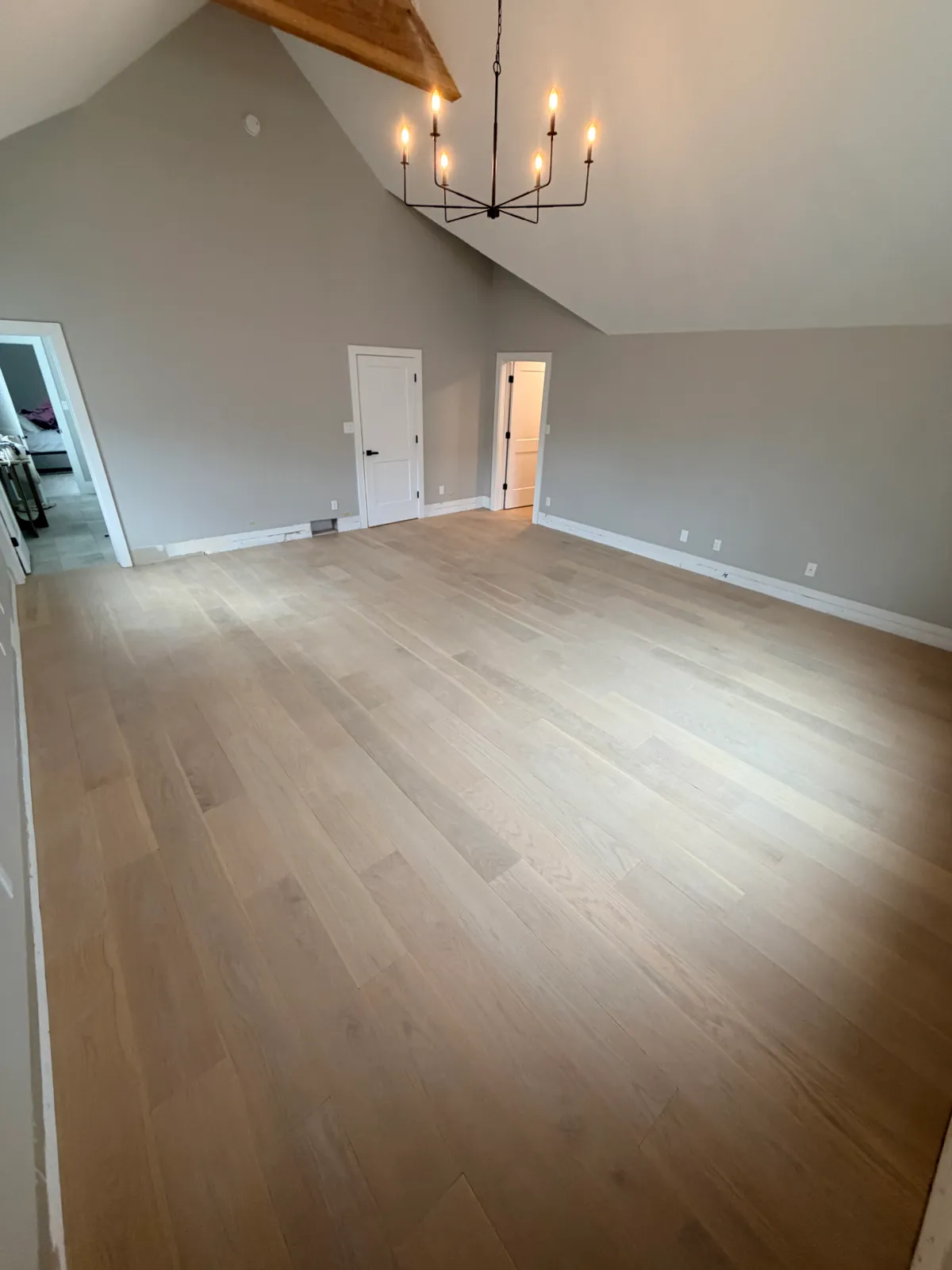
Quick Answer: Can Engineered Hardwood Be Refinished?
Yes, engineered hardwood can be refinished if it has a thick enough real wood wear layer. A higher-quality engineered floor with a thicker veneer may be able to handle a full sanding and refinishing. A thinner product may only be able to handle a screen and recoat, or no refinishing at all.
The decision usually comes down to:
- veneer thickness
- depth of scratches or stains
- whether the floor is flat and stable
- previous sanding history
- whether the product is glued, nailed, stapled, or floating
- whether replacement would produce a cleaner result
In Utah, dry air, seasonal movement, bright light, pets, stairs, and water exposure can all change the answer.
Engineered Hardwood Is Real Wood, But It Is Not Solid Hardwood
Engineered hardwood has a real wood top layer over a layered core. That top layer is what you walk on and what you see.
Solid hardwood is wood all the way through, so it can usually be sanded multiple times over its life. Engineered hardwood has a limited wear layer. Once that layer is too thin, sanding becomes risky because the equipment can cut through the veneer and expose the core below.
That is the key difference. The floor may look like solid hardwood from above, but the refinishing options are not always the same.
For a broader comparison, see engineered vs solid hardwood in Utah.
Veneer Thickness Is the Main Factor
Veneer thickness is the first thing to understand.
| Wear Layer | Refinishing Potential | Practical Meaning |
|---|---|---|
| Very thin veneer | Usually not refinishable | Replacement or careful recoat may be the only realistic option. |
| Around 2 mm | Limited options | May allow light screening, but full sanding is risky. |
| Around 3 mm | Sometimes refinishable | Depends on damage, flatness, and prior sanding. |
| 4 mm or thicker | Better refinishing candidate | More likely to handle a professional sanding if conditions are right. |
These are practical guidelines, not promises. A floor with a thicker veneer can still be a poor refinishing candidate if it is uneven, water damaged, poorly installed, or already sanded too aggressively.
Screen and Recoat vs. Full Refinish
Homeowners often use the word “refinish” for two different things.
Screen and Recoat
A screen and recoat lightly abrades the existing finish and adds a new coat. It does not remove deep scratches, stains, dents, or color problems the way full sanding can.
This can be a good option when:
- the finish is dull but the color is still good
- scratches are light
- the floor is stable
- the veneer is too thin for aggressive sanding
- you want maintenance, not a full reset
Full Sand and Refinish
A full refinish sands the floor down enough to reset the surface, color, and finish system. This is more powerful, but it removes more of the wear layer.
This can work when:
- the engineered veneer is thick enough
- scratches or finish wear are deeper
- the floor is flat and stable
- there is enough material left to sand safely
- a pro has confirmed the product can handle it
The wrong approach can ruin an engineered floor. Sand too aggressively on a thin veneer and there may be no clean way back.
When Engineered Hardwood Should Be Replaced Instead
Replacement may be safer than refinishing when:
- the veneer is too thin
- the floor has deep water damage
- boards are delaminating or separating
- the floor is cupped, buckled, or unstable
- the damage is widespread
- the product is a low-cost engineered floor with limited wear layer
- previous sanding has already removed too much material
- the color, width, or layout no longer fits the home
Replacement is not always the bad news option. Sometimes it is the cleaner long-term move because it lets you solve the real problem instead of spending money on a risky finish attempt.
If you are comparing repair, refinishing, and replacement, read refinishing vs replacing hardwood floors in Utah.
Utah Conditions That Change the Decision
Utah homes add a few realities that matter.
Dry indoor air can make movement, gaps, and checking more visible. Bright natural light can expose finish wear and sanding marks. Snow, grit, and wet entries can create damage near doors. Pets can add scratches and stains. Stairs and transitions can make partial refinishing harder to blend.
That does not mean engineered hardwood is a bad choice. In many Utah homes, it is the better hardwood option because it is more dimensionally stable than solid wood. It just means the refinishing decision should be made from the actual floor, not a generic answer online.
How to Tell What Kind of Engineered Hardwood You Have
Sometimes the original product paperwork tells you the wear layer. Often, homeowners do not have it.
An in-home evaluation can look at:
- exposed edges near vents, transitions, or stair parts
- product construction where visible
- board thickness
- wear layer clues
- previous refinishing marks
- floor flatness and movement
- depth of scratches or stains
- whether a screen and recoat is safer than sanding
If we cannot confirm enough wear layer for a full refinish, the safer recommendation may be repair, recoat, or replacement.
FAQ
Can all engineered hardwood be refinished?
No. Only engineered hardwood with enough real wood wear layer can be fully sanded and refinished. Thin veneer products may not be safe to sand.
How does veneer thickness affect refinishing?
The veneer is the real wood layer on top. The thicker that layer is, the more sanding tolerance the floor usually has. Thin veneers can be damaged permanently by aggressive sanding.
Can engineered hardwood be screened and recoated?
Often, yes, if the finish is compatible and the floor is stable. A screen and recoat is less aggressive than sanding, but it does not remove deep damage or change the floor the way a full refinish does.
When should engineered hardwood be replaced instead of refinished?
Replace it when the veneer is too thin, damage is deep or widespread, boards are unstable, water damage is severe, or refinishing would be too risky for the product.
Is engineered hardwood a good choice in Utah?
Yes, often. Engineered hardwood can be a strong Utah option because it is more dimensionally stable than solid hardwood. The key is choosing the right product and understanding future refinishing limits before buying.
Get the Floor Checked Before You Sand It
If you are wondering whether your engineered hardwood can be refinished, do not guess. The wrong sanding plan can destroy the wear layer and turn a repairable floor into a replacement project.
We can look at the floor in your home, explain whether refinishing is realistic, and help you compare recoat, repair, refinish, and replacement options.
Book your Free In-Home Floor Fit Consultation