Book Now
Side-by-side comparison of hardwood and LVP flooring samples

April 7, 2026  ·  By Alec McCullough

Hardwood vs. LVP: Which Is Right for Utah Homes?

Hardwood or LVP for your Utah home? We compare cost, durability, and climate performance so you can choose the right floor with confidence.

The Short Answer

If you’re finishing a basement, have kids or pets, or want one floor running wall-to-wall throughout your whole home, LVP is probably the right call. If you’re doing a main-floor living room or dining room and you care about the long-term investment value, hardwood is hard to beat.

Most Utah homes we work in end up with a combination of both. Here’s how to figure out which goes where.


What Hardwood Actually Is

Hardwood flooring comes in two forms: solid and engineered. This distinction matters a lot in Utah, so it’s worth understanding before you choose.

Solid hardwood is exactly what it sounds like: a single plank of milled wood, typically 3/4” thick. It can be sanded and refinished multiple times over its lifetime, which is why a well-maintained hardwood floor can last 50 years or more. The tradeoff is that solid wood moves with humidity. It expands when the air is wet and contracts when it’s dry.

Engineered hardwood has a real wood veneer on top (the same species, the same grain, the same look) bonded over a layered core (usually plywood or HDF). That layered construction makes it significantly more dimensionally stable. It handles humidity swings better than solid, and it can still be refinished once or twice depending on the veneer thickness.

The most popular species we see in Salt Lake Valley homes right now are white oak, hickory, and walnut. The National Wood Flooring Association maintains Janka hardness ratings for each species, which helps determine scratch resistance. White oak in particular has become the go-to for Mountain Modern interiors: neutral, tight-grained, works with almost everything. Wide planks (5” and up) are the dominant trend, though narrower planks are a smart move in rooms where stability is a concern.


What LVP Actually Is

LVP stands for Luxury Vinyl Plank. It’s a synthetic flooring product designed to look like hardwood, and the good ones do a convincing job of it.

A standard LVP plank has four layers:

  • A backing layer for stability and sound absorption
  • A rigid core (usually SPC, stone plastic composite, in better products)
  • A photographic design layer that replicates the look of real wood grain
  • A wear layer on top, the clear protective coating that stands between your floor and daily life

That wear layer is what you’re really paying for. It’s measured in mil (thousandths of an inch). For most homes, 12 mil handles normal traffic fine. If you have large dogs, young kids, or high-traffic areas, 20 mil is worth the upgrade.

LVP installs in two ways. Click-lock (floating) is the most common for residential projects. The planks lock together and sit over the subfloor without adhesive, making individual plank replacement straightforward. Glue-down is more stable underfoot and a better choice for large open areas or radiant heat systems.

The most important thing to know: LVP is 100% waterproof from wear layer to core. Not water-resistant. Waterproof.


Want to See Both in Your Home Before You Decide?

We bring samples of hardwood and LVP directly to your door, so you can compare them in your actual lighting, next to your actual walls and cabinets. Book a free consultation.


Side-by-Side Comparison

HardwoodLVP
MaterialReal wood (solid or engineered veneer)Synthetic (photographic layer over rigid core)
WaterproofNo (avoid kitchens, baths, basements)Yes, 100% waterproof
Cost, installed$9–$16/sq ft$3.99–$6.99/sq ft
RefinishableYes (solid); limited for engineeredNo
Lifespan50+ years (hardwood); 25-30 years (engineered) with care20-25 years
Underfoot feelDense, solid, feels like real woodSlightly softer; some products include underlayment
Resale valueHigh; buyers notice and respond to real hardwoodGood; modern LVP reads well to buyers
Stability in dry climatesLower (solid) / Higher (engineered)Excellent, not affected by humidity
Best roomsLiving rooms, dining rooms, bedroomsKitchens, basements, bathrooms, whole-home
Pet/kid friendlyModerate; surface can scratchVery good; 12-20 mil wear layer handles it

Utah’s Climate Changes the Math

This is the part most flooring guides skip. Utah is not a humidity-neutral environment. Salt Lake City sits at 4,226 feet above sea level, and the Wasatch Front spends most of the winter in single-digit relative humidity, regularly dropping below 20%. That’s close to desert conditions.

Wood contracts when it loses moisture. In a dry Utah winter, a solid hardwood floor will gap between planks. That’s not a defect; it’s physics. Come spring when humidity rises slightly, those gaps close back up. Most homeowners adjust to the seasonal movement over time, but it can be disconcerting if you’re not expecting it.

Three ways to manage it:

  1. Choose engineered over solid. The layered core resists humidity swings significantly better than solid wood. For most Utah homes, engineered hardwood is the smarter pick: same look, better performance.
  2. Mind your plank width. Wider planks have more surface area to expand and contract. In rooms where you’re concerned about movement, narrower planks (3-4”) are the conservative choice.
  3. Acclimate properly. Good installers will let hardwood sit in your home for 48-72 hours before installation, letting it adjust to your home’s specific humidity. This step matters.

LVP has none of these concerns. It’s dimensionally stable regardless of humidity, which is a real advantage in Utah’s climate. You won’t get gapping in January or buckling in July.

If you’re installing below grade (which describes a large portion of the finished basements in neighborhoods like Draper, South Jordan, and Herriman), LVP isn’t a preference, it’s the right answer. Moisture comes up through concrete slabs. Hardwood doesn’t belong below grade in Utah, and we won’t recommend it there.


Room-by-Room Recommendations

Living Room and Dining Room

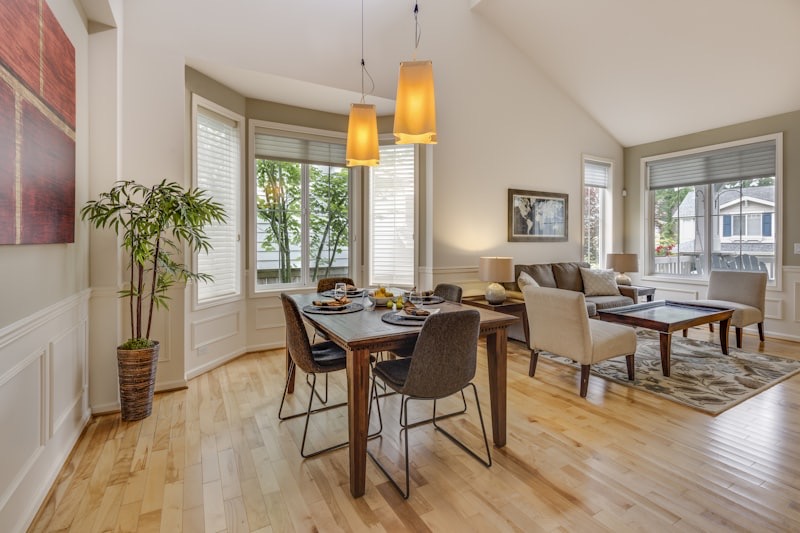
Hardwood. These are the rooms where the investment pays off visually and financially. Main-floor living spaces are what buyers notice first at resale. Engineered white oak in a wide-plank format is the most requested look in the Salt Lake Valley right now.

If your budget is tight, LVP in a realistic wood look is a legitimate option here too. the gap in visual quality between quality LVP and engineered hardwood has narrowed substantially. But if you have the budget for hardwood, use it here.

Kitchen

LVP. Water, dropped glasses, a dishwasher that runs twice a day. Kitchens are hard on any floor. Hardwood can hold up in a kitchen, but it requires more attention and carries real risk near the sink and dishwasher. LVP gives you the wood look with zero worry. This is the room where waterproofing earns its price.

Basement

LVP, no exceptions. Utah basements sit below grade on concrete slabs. Even in finished basements that feel perfectly dry, there’s vapor transmission through the slab over time. Hardwood in a basement is a risk not worth taking. Good LVP, especially a rigid-core SPC product with the right underlayment, is comfortable, durable, and looks great.

Bedrooms

Either works well. Bedrooms see lighter traffic, lower moisture, and no food. Hardwood adds warmth and continuity if you’re running it through the rest of the main floor. LVP is a practical choice if you want the same floor running from main floor into basement, or if you have pets sleeping in the bedrooms.

Bathrooms

LVP only. Tile is the traditional choice and still the most durable, but LVP is a strong alternative: warmer underfoot, easier to install, and fully waterproof. Hardwood in a bathroom is not a good idea.

Mudrooms and Laundry Rooms

LVP. High moisture, heavy traffic, boots, and wet gear from a Utah ski weekend make these rooms hard on any product. LVP handles it without complaint.


Pros and Cons

Hardwood

Pros

  • Real wood: the look and feel are unmatched
  • Refinishable: can be sanded and restained multiple times over its life
  • Long lifespan when maintained (50 years is realistic)
  • Strong resale value: buyers respond to hardwood
  • Improves with age, developing patina and character over time

Cons

  • Higher upfront cost than LVP
  • Not waterproof, so not suitable for kitchens, baths, or below grade
  • Requires more care in Utah’s dry climate (engineered mitigates this significantly)
  • Seasonal gapping is normal with solid wood, and some homeowners find it unnerving
  • Installation is more complex: acclimation period required, subfloor prep matters

LVP

Pros

  • 100% waterproof, goes anywhere in the home
  • Lower cost than hardwood in most cases
  • Extremely durable surface (20 mil wear layer handles pets, kids, and heavy traffic)
  • Dimensionally stable in Utah’s low humidity
  • Works below grade and is the right choice for basements
  • Realistic wood look (quality has improved dramatically in recent years)
  • Easier and faster to install than hardwood

Cons

  • Not refinishable: when the wear layer is done, the floor is done
  • Shorter lifespan than hardwood: 20-25 years vs. 50+ for solid
  • Underfoot feel is slightly less substantial, and sounds and feels different from real wood
  • Resale perception is still a small step below real hardwood for high-end buyers
  • Not repairable in the same way: individual plank replacement is possible but depends on availability of matching product years later

Our Recommendation

Here’s the honest version: for most Utah homes, the right answer is both.

Run engineered hardwood on your main living floor (living room, dining room, and wherever you want that warm, investment-grade look). Run LVP in the kitchen, and run it throughout your basement. For budget planning, our 2026 cost guide breaks down installed prices for both. In bedrooms, go with whichever matches the adjacent floors.

The biggest mistake we see is people defaulting to all-LVP to save money upfront, then wishing they’d put hardwood in the main living areas when they’re ready to sell. And the second-biggest mistake is putting solid hardwood in a Utah basement and dealing with moisture damage two winters later.

The one thing that makes this decision genuinely easy: seeing both options in your home, in your lighting, against your walls. A white oak sample looks different in a Sugar House craftsman than it does in a new build in Daybreak. That’s exactly why we bring the samples to you instead of asking you to decide under fluorescent showroom lights.


Book a Free Consultation

We bring curated samples of hardwood and LVP directly to your door. No trip to a showroom, no second-guessing under bad lighting. You see exactly how each option looks in your space, we measure your rooms, and you leave with a firm quote before we walk out the door.

No pressure. No obligation.

Book a Free Consultation

Ready to see it in your home?

The consultation is free. There's no obligation. If we can't find the right floor for your space, we'll tell you that too.