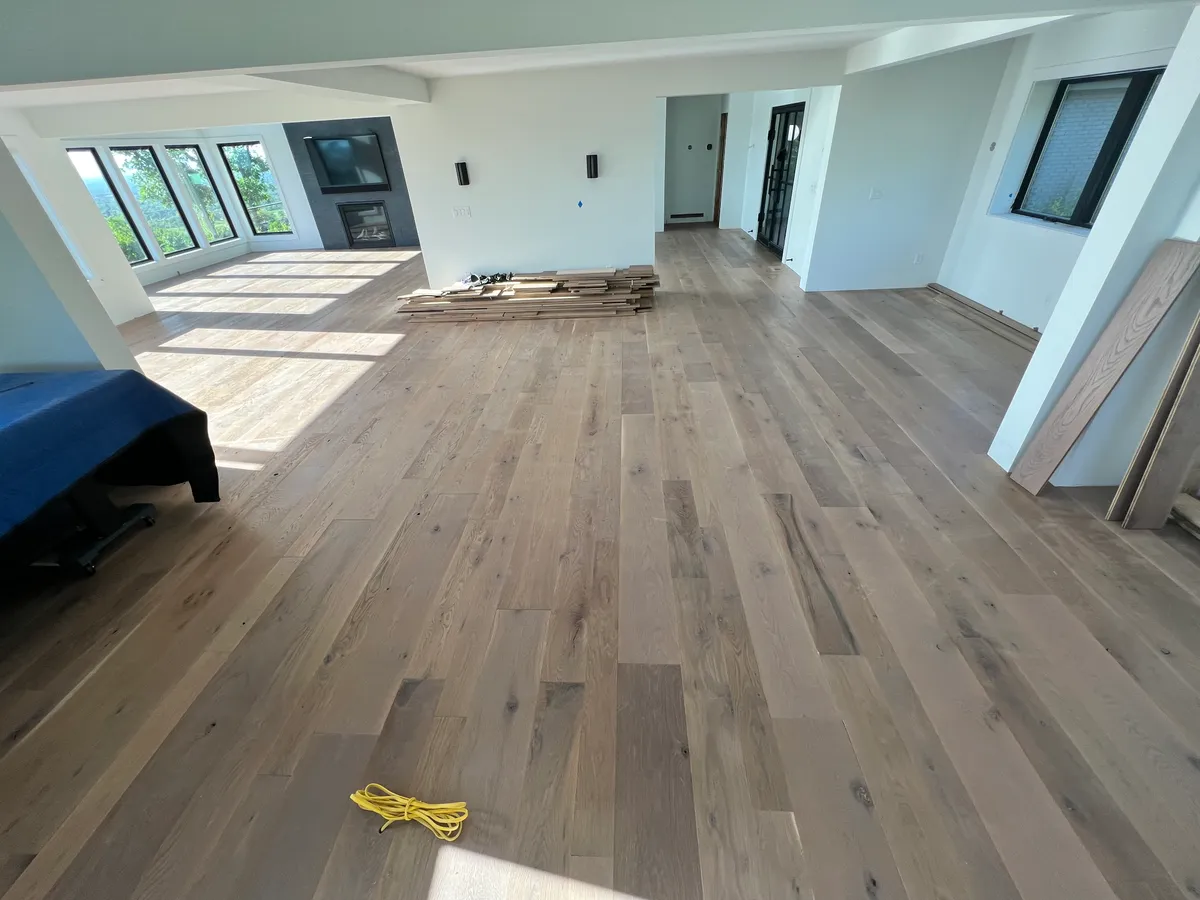
You’re ready for new floors. You’ve picked your material, you’ve got your color dialed in, and now you’re staring at your calendar wondering: how long is my house going to be a construction zone?
Fair question. Let’s get into the real timelines, not the best-case-scenario numbers, but what actually happens when an installation crew shows up at your home.
Installation Time by Flooring Type
Every material installs differently, and the timelines vary more than you might think. Here’s what to expect for a typical project, let’s call it 500-800 square feet, which covers most main-level living areas in a Utah home.
waterproof laminate: 1-2 Days
laminate is one of the fastest floors to install. The planks click together without glue or nails, the material cuts easily, and there’s no drying or curing time required. Once the last plank goes down, you can walk on it and move furniture back in.
Most laminate installations for a standard main floor can be completed in a single day. Larger homes or layouts with lots of closets, doorways, and transitions might push into day two. Either way, the disruption to your daily life is minimal.
No acclimation period is needed for most quality laminate products, which means the installation can usually start as soon as the material arrives.
Hardwood: 3-5 Days (Plus Acclimation)
Hardwood takes longer, and for good reason. there’s more precision involved.
First, there’s acclimation. Hardwood needs to adjust to the moisture and temperature conditions in your home before it goes down, or you’ll get gaps and warping later. This typically takes 3-5 days where the boxes sit open in the room. In Utah’s dry climate, this step is especially important and shouldn’t be rushed. The National Wood Flooring Association recommends acclimation as a critical step for any wood flooring installation.
The installation itself takes 2-4 days for a main-level area. Nail-down installation on a wood subfloor is the most common method and involves fastening each board individually. It’s meticulous work. If you’re going with a glue-down application on concrete (common in basements along the Wasatch Front), add extra time for the adhesive to set.
Then there’s finish. If you’re installing prefinished hardwood, which is what most homeowners choose these days. You’re done once the last board is in. But if you’re doing unfinished hardwood with on-site sanding and finishing, add 2-3 more days for sanding, staining, and multiple coats of polyurethane, each of which needs to dry.
Total realistic timeline for prefinished hardwood: about a week from when the boxes arrive to when you’re fully moved back in. For site-finished: closer to two weeks.
Tile: 3-5 Days
Tile installation involves several distinct phases, and each one needs time.
Day one is typically prep work and layout, making sure the subfloor is level and flat, planning the tile pattern, and setting up. Then comes the actual tile setting, where each tile is laid in thinset mortar. This is the most time-intensive phase and usually takes 1-3 days depending on the area size and tile format. Large-format tiles cover ground faster but require a flatter subfloor.
After the tile is set, the mortar needs to cure, usually overnight. Then comes grouting, which takes a half day to a full day. After grouting, the floor needs another 24 hours before it can handle foot traffic.
From start to finish, expect 3-5 days of active work plus cure times. You’re typically looking at about a week before the room is fully usable again.
Factors That Affect Your Timeline
Material type gives you a baseline, but several other things influence how long your specific project will take.
Room Size and Layout
This one’s obvious, but it matters more than you might think. A single rectangular room goes fast. A floor plan with four closets, two doorways, an island, and a fireplace hearth? All those cuts and transitions add up. Complex layouts can easily add 50% to the installation time compared to a simple open space.
Subfloor Condition
The subfloor (whatever is underneath your current flooring) needs to be flat, clean, and structurally sound. If your installer pulls up old carpet and finds a concrete slab with cracks and high spots, that needs to be addressed before new flooring goes down. Leveling compound, crack repair, or moisture mitigation can add a half day to a full day to the project.
In older homes around the Salt Lake valley, especially in neighborhoods like the Avenues, Sugar House, or parts of Murray, subfloor issues are more common just because of the age of the construction. It’s not a problem, but it’s good to set expectations that there might be some prep work involved.
Furniture Moving
Someone has to clear the room before installation starts. If you’re handling this yourself, plan to have everything out before the crew arrives. If the installation team is moving furniture for you, that adds time, typically a couple of hours on each end of the project.
Our advice: move small items and clear closets yourself. Let the crew handle the heavy stuff if that’s part of your package. Either way, have a plan for where everything goes. You’d be surprised how many projects get delayed because there’s nowhere to put the couch.
Old Flooring Removal
If there’s existing flooring that needs to come out, factor in removal time. Carpet pulls up quickly, usually a couple of hours for a full main floor. Old tile is a different story. Tile removal is noisy, dusty, and can take a full day depending on how well it’s adhered. Old hardwood removal falls somewhere in between.
Pattern Complexity
A standard stagger pattern (which is what most floors use) installs efficiently. These are among the top flooring trends in 2026. Herringbone, chevron, or diagonal patterns look beautiful but require more cuts and more careful alignment, adding time to the installation. Expect roughly 30-50% more labor time for these patterns compared to a straight lay.
What to Expect on Installation Day
Knowing the timeline is one thing. Knowing what the experience actually looks like is another.
Morning arrival. Your installation crew will typically arrive between 8 and 9 AM. They’ll do a walkthrough, confirm the plan, and set up their workspace. Expect a bit of noise from cutting equipment, most crews set up a cutting station in the garage or just outside to keep dust out of the house.
During installation. The area being worked on will be off-limits. If you’re doing a main floor, plan to use a different entry point and keep kids and pets away from the work zone. Most installations are surprisingly clean, modern click-lock systems don’t create much dust or debris.
End of day. The crew will clean up their work area, remove debris, and walk you through what was completed. If it’s a multi-day project, they’ll let you know what to expect the next morning.
Noise level: moderate to loud, depending on the amount of cutting involved. Plan to be out of the house or in a different area if you’re working from home. Power saws aren’t compatible with Zoom calls.
Plank & Go’s Typical Timeline: Consultation to Completion
Here’s what the full process looks like with us, from first contact to finished floors:
Day 1: In-home consultation. We come to you with samples, take measurements, and talk through options. This usually takes 30-60 minutes. No pressure, no sales pitch. Just straight talk about what works for your space and budget. Here’s what to expect during that visit.
Days 2-5: Quote and material selection. We’ll follow up with a detailed quote. Once you’ve confirmed your selection, we order the material. Most products arrive within a few business days; specialty orders can take 1-2 weeks.
Installation week. Once materials are in and any acclimation period is complete, we schedule installation at a time that works for you. The actual install follows the timelines outlined above, 1-2 days for laminate, 3-5 days for hardwood or tile.
After installation. We do a final walkthrough with you to make sure everything looks right and answer any care questions. Then you enjoy your new floors.
From first call to finished floors, most projects land in the 2-3 week range. Simpler projects (laminate in a single room, for example) can move faster. Complex whole-home installations with specialty materials might take a bit longer. We’ll give you a clear timeline upfront so you can plan accordingly.
For budget planning alongside your timeline, check out our flooring cost guide for Salt Lake City.
Let’s Get Your Project on the Calendar
If you’re ready to move forward, or just want a realistic timeline for your specific space. we’re happy to come take a look. Free consultation, real answers, no guesswork.