
Water damaged hardwood floors do not all need to be replaced, but they do need to be taken seriously. The faster you deal with the moisture, the better your odds of saving part or all of the floor.
In Utah homes, hardwood water damage usually comes from appliance leaks, dishwasher lines, fridge supply lines, pet accidents, wet entries, basement moisture, roof or window leaks, and spills that sat too long. Some damage is cosmetic. Some gets into the boards, subfloor, or finish system and changes the repair plan completely.
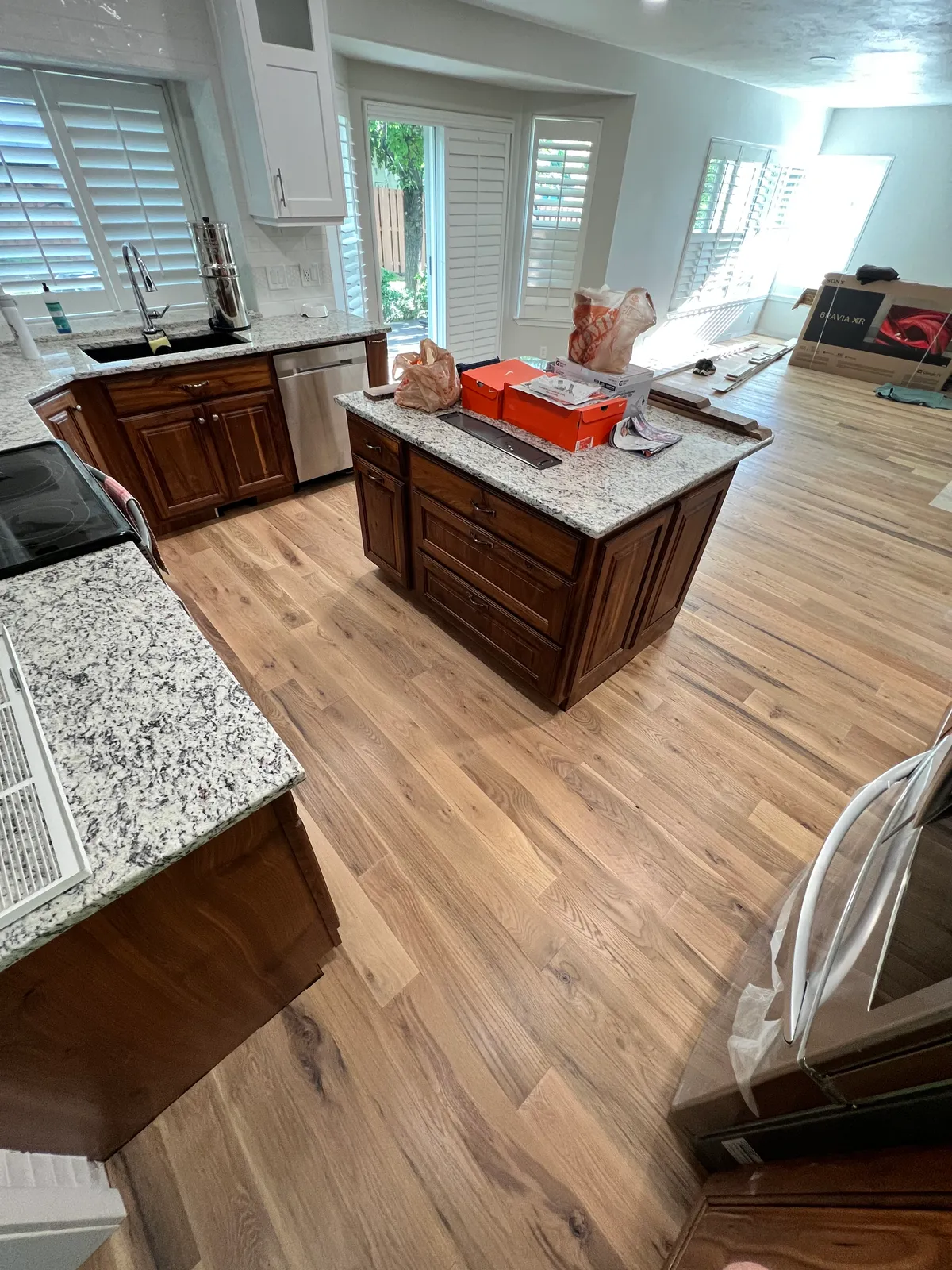
Quick Answer: Can Water-Damaged Hardwood Floors Be Repaired?
Yes, water-damaged hardwood floors can often be repaired if the damage is isolated, the boards are still stable, and the moisture source has been stopped. The repair may be as simple as replacing a few boards, drying the area, and refinishing the connected floor so the patch blends.
Replacement becomes more likely when the damage is widespread, the boards are cupped or buckled, the subfloor is wet, black staining is deep, or the floor is too thin or unstable to refinish.
The key is sequence: stop the water, dry the area, inspect the damage, then decide between repair, refinishing, and replacement. Do not sand or cover the floor before the moisture problem is understood.
What to Do First After a Leak or Spill
If the water event just happened, speed matters.
- Stop the water source if possible.
- Remove standing water immediately.
- Pull wet rugs, mats, or furniture off the floor.
- Start airflow and drying.
- Document the damage with photos if insurance may be involved.
- Do not cover the area with plastic or a rug.
- Do not rush into sanding before the floor has dried and been evaluated.
Water can move between boards and under the floor. The surface may look dry while moisture is still trapped below. That is why the first decision is not finish color or replacement product. The first decision is whether the floor and subfloor are actually dry enough to evaluate.
What Water Damage Looks Like in Hardwood
Common signs include:
- cupping, where board edges rise
- crowning, where the board center rises
- buckling or boards lifting from the subfloor
- dark stains or black marks
- cloudy or peeling finish
- gaps that appear after drying
- loose boards or movement underfoot
- soft spots or a musty smell
Not every sign means the same thing. A cloudy finish may be mostly surface damage. Deep black staining may mean water got into the wood. Buckling can point to a more serious moisture or subfloor issue.
What Can Usually Be Saved
Hardwood has a better chance of being saved when:
- the water exposure was short
- the leak was isolated
- the boards are still flat and stable
- staining is limited
- the floor has enough thickness to sand
- the subfloor is dry and sound
- the damaged area is small enough to blend
In those cases, the best path may be targeted board replacement, repair, and refinishing. Sometimes the repair is only a few boards. Sometimes the connected room needs to be sanded and refinished so the repaired area does not stand out.
When Water Damage Usually Means Replacement
Replacement becomes more likely when:
- boards are severely cupped, buckled, or loose
- the damage covers a large area
- water sat for a long time
- stains are deep and widespread
- the floor is engineered hardwood with a thin wear layer
- the subfloor is damaged or still wet
- the existing floor has already been sanded too many times
- matching the old floor is not realistic
Refinishing only changes the surface. It cannot fix a wet subfloor, unstable boards, severe movement, or a floor with too little material left to sand safely.
If replacement becomes the cleaner answer, the scope should still be specific: demo, disposal, subfloor prep, new material, transitions, trim, and how the new floor will meet adjacent rooms.
Repair vs. Refinish vs. Replace
Use this decision filter before spending money:
| What You See | Likely Path | Why |
|---|---|---|
| Small isolated stain or a few damaged boards | Repair | The surrounding floor may still be worth saving. |
| Surface wear after a minor water event | Refinish | The floor may be structurally fine but visually damaged. |
| Damaged boards in an otherwise good floor | Repair, then refinish | Replacement boards can blend better after refinishing. |
| Severe cupping, buckling, or widespread black stains | Inspect for replacement | The problem may be deeper than the finish. |
| Wet or damaged subfloor | Correct subfloor before flooring work | New finish or new boards will not solve trapped moisture. |
For the broader decision, see refinishing vs replacing hardwood floors in Utah.
Utah-Specific Water Damage Risks
Utah’s climate creates a specific pattern: dry air can make hardwood movement more visible, while snow, grit, and wet entries create repeated moisture exposure.
The most common trouble spots are:
- kitchens near dishwashers, sinks, and refrigerators
- entries where snowmelt sits near hardwood
- sliding doors and windows with small leaks
- pet areas
- basements or slab-adjacent rooms
- laundry-adjacent hallways
- older homes with unknown subfloor conditions
Dry air does not prevent water damage. It can actually make the after-effects more noticeable as boards dry, shrink, cup, or gap.
Can Engineered Hardwood Be Repaired After Water Damage?
Sometimes. Engineered hardwood depends on the thickness of the real wood wear layer, the construction of the product, and how badly the board has moved or stained.
Some engineered hardwood can be lightly refinished. Some cannot be sanded safely. If the wear layer is thin or the board has delaminated, replacement may be the better option.
This is why product identification matters. Solid hardwood and engineered hardwood can look similar from above, but the repair options are not always the same.
How We Evaluate Water-Damaged Hardwood
During an in-home evaluation, we look at:
- where the water came from
- whether the source has been stopped
- board movement, cupping, crowning, and buckling
- stain depth and finish condition
- whether the floor is solid or engineered
- how much material is left to sand
- subfloor concerns
- whether a board repair can blend
- whether refinishing or replacement is the cleaner long-term move
The goal is not to sell the biggest project. The goal is to avoid the wrong fix. Sanding too soon, replacing too much, or ignoring trapped moisture can all create a worse result.
FAQ
Can water-damaged hardwood floors be repaired?
Yes, if the damage is isolated, the boards are stable, and the moisture source has been stopped. Repair may involve replacing damaged boards and refinishing the connected area so the fix blends.
How fast should I act after a spill or leak?
Immediately. Remove standing water, dry the area, improve airflow, and stop the water source. The longer water sits, the more likely it is to affect the boards, finish, and subfloor.
When does water damage mean full replacement?
Full replacement is more likely when the floor is buckled, severely cupped, deeply stained, unstable, widespread, too thin to sand, or sitting over a damaged subfloor.
Can black stains be sanded out of hardwood?
Sometimes, but not always. Light staining may sand out. Deep black staining often means the water penetrated farther into the wood and may require board replacement.
Should I refinish hardwood after water damage?
Refinishing can work if the floor is dry, stable, and structurally sound. If damaged boards remain or moisture is still present, refinishing alone will not solve the problem.
Get the Floor Checked Before You Replace Everything
If your hardwood floor has water damage, do not guess from photos or a generic cost range. The right answer depends on how deep the water went, whether the floor is stable, and whether the damaged area can be repaired cleanly.
We can inspect the floor in your home, explain what can be saved, and help you compare repair, refinishing, and replacement options.
Book your Free In-Home Floor Fit Consultation