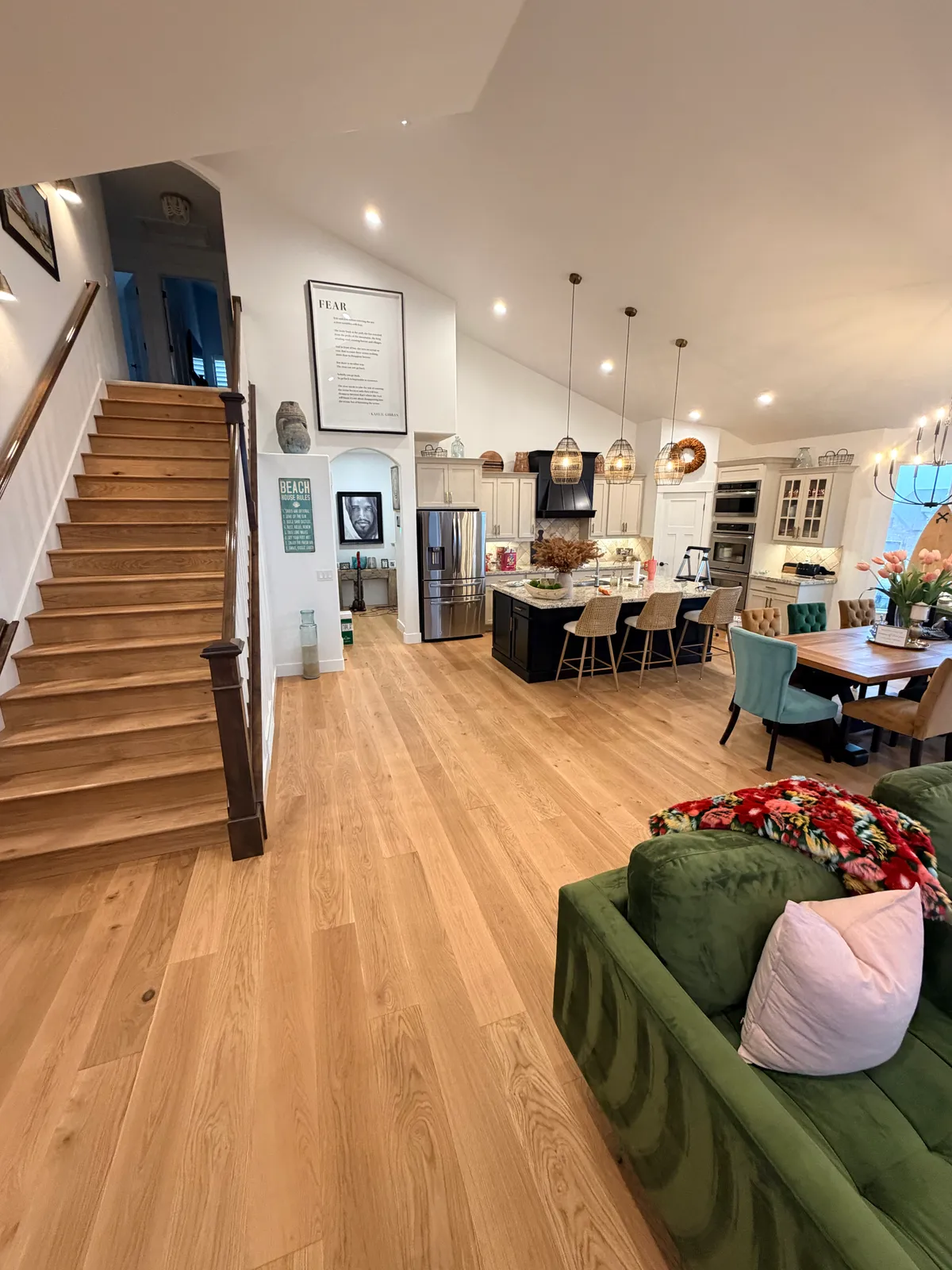
Best floor covering for stairs: carpet, LVP, hardwood, or laminate?
Quick, practical answer for Utah homeowners
- Safety and quiet: carpet or a carpet runner.
- Wet-resistance and easy maintenance (mudroom/garage stairs): textured LVP.
- Visual impact and resale: hardwood (engineered or solid where appropriate).
- Laminate: only if the manufacturer supplies a compatible stair-nose and your installer knows the system.
Why stairs deserve a different decision in Utah
Stairs take concentrated wear at the nosing and edges. In Utah that wear usually includes sand and winter grit from snow boots, plus seasonal indoor dryness that can make wood move. That means product choice matters, but installation details (subfloor stiffness, matched stair-nose, secure fastening, and transitions) are what make a job last. Skip any of those and you’ll be back fixing squeaks, loose noses, or worn edges.
Material breakdown — what actually works here (Salt Lake, Davis, Weber, Summit county notes)
Carpet
- Pros: best traction, quiet, forgiving — ideal for kids, seniors, and bedrooms.
- Cons: shows grit/pet hair; needs routine vacuuming and occasional deep clean.
- Best use in Utah: interior stairs where safety and noise control matter (upstairs bedrooms, interior runs). Use darker, dense fibers or a short-pile runner on entry stairs to hide grit from boots.
LVP (Luxury Vinyl Plank)
- Pros: many lines are water-resistant or waterproof, easy to clean, pet- and boot-friendly, and some include matched stair-nosing.
- Cons: cheap LVP can have thin nosing or slick finishes that get dangerous on stairs.
- Best use in Utah: basement stairs, mudroom/garage access where wet shoes and salt are common — pick textured, low-gloss surfaces and a nosing sized to your plank.
Hardwood (solid or engineered)
- Pros: premium look, long life when installed right, ties open stairs and main floors together.
- Cons: higher cost, shows scratches, solid wood needs acclimation in Utah’s dry indoor winters; edges can be noisy if treads aren’t reinforced.
- Best use in Utah: visible open stairs and main-floor transitions. Prefer engineered hardwood or stable species (white oak) for less seasonal movement.
Laminate
- Pros: economical, lots of styles.
- Cons: many laminate systems lack a true stair-nose; edges and nosing take heavy abuse and can fail early.
- Best use in Utah: only when the laminate line supplies a stair-nosing system and the installer has stair experience. Otherwise choose LVP or engineered hardwood.
Room-by-room recommendations (real on-site choices)
- Basement stairs: LVP for moisture resistance; carpet if noise and traction are the priority and humidity is controlled.
- Entry/garage stairs: expect grit and salt — textured LVP or a darker, dense runner. Plan for more frequent cleaning.
- Open/two-story stairs: hardwood or hardwood with a runner for style and resale value.
- Stairs to bedrooms: carpet for comfort and quiet.
What installers in Utah look for (so you don’t inherit problems)
- Subfloor and tread stiffness — we reinforce or sister treads if there’s hollow flex before we install any finish.
- Stair-nose compatibility — confirm the nose matches plank thickness and profile; a misfit nose equals early failure.
- Secure fastening and glue patterns — stairs require mechanical fastening plus adhesive where specified; floating installs need the correct system.
- Transitions and landings — how the nose meets the hallway, threshold, and next floor. Quote these together; they’re often the costly part if missed.
- On-site traction test — pull real plank/nose samples and test with your everyday shoes and pet paws.
Common mistakes I see in Utah homes
- Choosing shiny, smooth planks for entry stairs where grit and wet shoes are common.
- Buying low-cost LVP or laminate with no matched nosing.
- Treating stairs like flat floors—ignoring nosing, riser detail, and fastening needs.
- Not budgeting for subfloor repairs or extra labor on tight/curved stairs (common in older Salt Lake and mountain homes).
Installer-ready checklist for your consultation
- Who uses the stairs most? (kids, elderly, pets, boots)
- Is the stair visible from the main entry or living room? (affects product choice)
- Do stairs get winter boot/garage traffic? (add grit/water protection)
- Measure stair width and note curved or custom treads — these add cost.
- Request to see the exact stair-nose that will be used with your floor.
- Ask for written plan covering subfloor reinforcement, nosing, transitions, and finish.
Typical Utah installed cost ranges (per stair, installed — local variance applies)
- Carpet: $35–$75 per stair — strong value for safety and quiet.
- LVP: $65–$120 per stair — wide range depending on plank quality and matched nosing.
- Laminate: $60–$100 per stair — only when a full stair system and nosing are provided.
- Hardwood (engineered/solid): $100–$220+ per stair — species, finish, and custom work raise costs.
Notes on price: Park City, Summit County, and other mountain jobs are higher for travel, curved cuts, and reinforced nosing. Removal of old material, number of landings, and subfloor repairs also change the quote.
A short decision checklist for Utah homeowners
- Prioritize who uses the stairs: kids/elderly/pets -> traction/cushion (carpet or textured LVP).
- If the stairs are a visual focal point -> choose hardwood or premium LVP and plan a runner if you need extra traction.
- For entry or garage stairs -> textured LVP or a darker runner; expect regular maintenance.
- Always use a product with a stair-nose sized to the plank or buy a full stair system from the manufacturer.
- Get the landing and hallway quoted at the same time so transitions aren’t an afterthought.
- Ask the installer to show finished nosing examples and a test-fit on your stairs.
What we do on-site in Salt Lake, Davis, Weber, or Summit counties
We bring real samples, test them on your stairs in your lighting, and feel texture with your shoes and pets. We inspect treads and subfloor, confirm stair-nose compatibility, and provide a clear written estimate that includes landings and transitions. No pressure — just a practical plan so your stairs are safe, quiet, and durable.
Ready to see real samples on your stairs? Schedule a no-pressure home visit in Salt Lake, Davis, Weber, or Summit County and we’ll walk your stairs, test nosing options, and give a written plan with firm pricing.