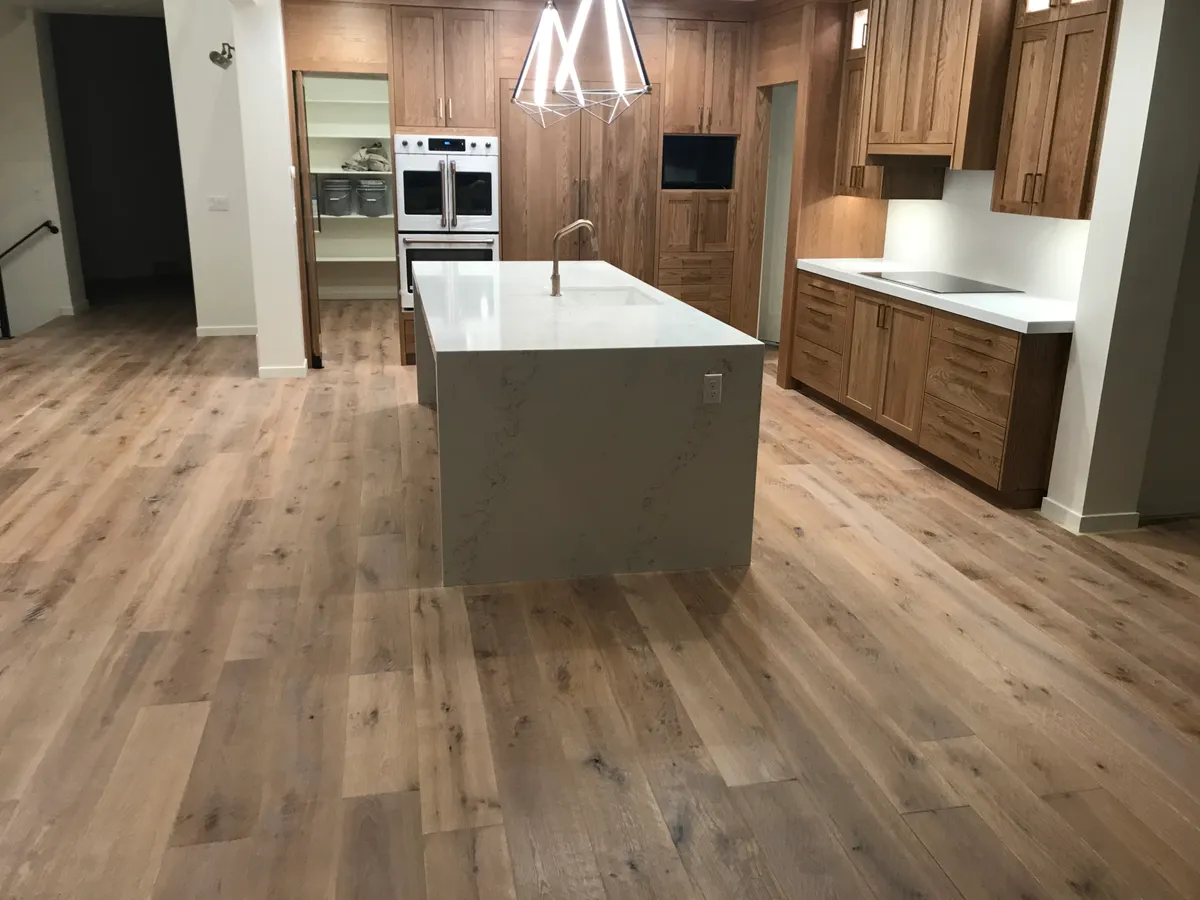
Yes, laminate flooring can increase home value.
But it usually does it in a different way than hardwood.
Hardwood tends to raise the perceived quality of the home. Laminate usually raises the practical appeal of the home. It makes the place feel more move-in ready, easier to maintain, and less like a project.
That matters a lot in the real world.
When Laminate Helps Value Most
Laminate tends to help most when it is replacing something the buyer already sees as a problem.
Good examples:
- worn carpet in the main living area
- dated sheet vinyl in an entry or kitchen
- a mix of old flooring types that makes the home feel chopped up
- a starter or family home where buyers care about durability
In those cases, laminate is not competing against hardwood. It is competing against the current floor. If the current floor is hurting the house, a strong laminate install can absolutely improve value.
Where Laminate Usually Performs Best
Laminate is strongest in homes where buyers want a clean, updated look and do not necessarily expect premium hardwood.
That usually includes:
- family homes
- move-in-ready resale prep
- investment properties
- secondary bedrooms and upstairs spaces
- open living spaces where continuity matters
What buyers like is simple:
- it looks current
- it feels easier to maintain
- it handles kids, pets, and everyday wear better than old carpet
That is often enough to make the house easier to sell.
What Kind of Laminate Actually Helps
Not all laminate helps value equally.
The laminate that performs best for resale usually has:
- a realistic wood look
- a matte or low-sheen finish
- good plank size and texture
- enough density to feel solid underfoot
- strong water resistance for normal household life
Cheap laminate has the opposite effect. If it looks shiny, thin, or obviously fake, buyers clock it fast. That does not mean laminate is the problem. It means the wrong product is the problem.
Where Hardwood Still Wins
If you are asking whether laminate helps value, it is worth being honest about where hardwood still has the edge.
Hardwood usually wins in:
- higher-end homes
- formal living or dining rooms
- resale situations where buyers expect real wood
- homes where material quality is part of the story
So the question is not “is laminate good or bad?”
It is:
Is laminate the right level of floor for this home, this budget, and this buyer?
Sometimes the answer is yes. Sometimes it is clearly no.
Laminate vs. Carpet for Value
This is one of the easiest calls.
If the home still has tired carpet in visible living spaces, laminate is usually a major improvement. Buyers consistently respond better to a clean hard-surface floor than carpet that already feels like something they will replace.
That is especially true when the carpet:
- shows traffic patterns
- holds pet odor
- feels dated by color or texture
- breaks the flow between adjacent rooms
If your real alternative is doing nothing to old carpet, laminate usually looks like a strong move.
Laminate vs. Hardwood for Value
If the house can support hardwood and the budget is there, hardwood often creates more value.
If the house needs a smart, durable update without pushing too much money into the project, laminate often gives you the better return on dollars spent.
That is why laminate is such a strong pre-list tool in the middle of the market. It is not trying to be a luxury statement. It is trying to make the house feel easy, current, and cared for.
Utah-Specific Considerations
Laminate makes a lot of sense in Utah homes because homeowners here tend to care about:
- snow and mud getting tracked in
- pets
- dry air
- open-plan living spaces
- practical long-term maintenance
A good waterproof laminate floor handles those conversations well, especially in the rooms that take the most day-to-day traffic.
If you are weighing it against real wood, hardwood vs. laminate in Utah is the best next read.
When Laminate Does Not Add Much
Laminate usually does not add much value when:
- the current floors are already in good shape
- the home clearly calls for real hardwood
- the laminate choice looks cheap or trendy
- the install is poorly done
Bad transitions, hollow feel, obvious repeats in the pattern, and weak trim work can make a buyer focus on the wrong thing.
The Bottom Line
Laminate flooring can increase home value when it:
- replaces flooring that is actively hurting the house
- fits the price point of the home
- looks clean, realistic, and intentional
- makes the home feel more durable and move-in ready
It usually does not outshine hardwood in premium resale situations, but it can absolutely be the smarter financial choice in many homes.
If you want to figure out whether laminate or hardwood makes more sense in your home, we will bring both to you, show you what they look like in the actual rooms, and help you make the call with the real house in front of you.