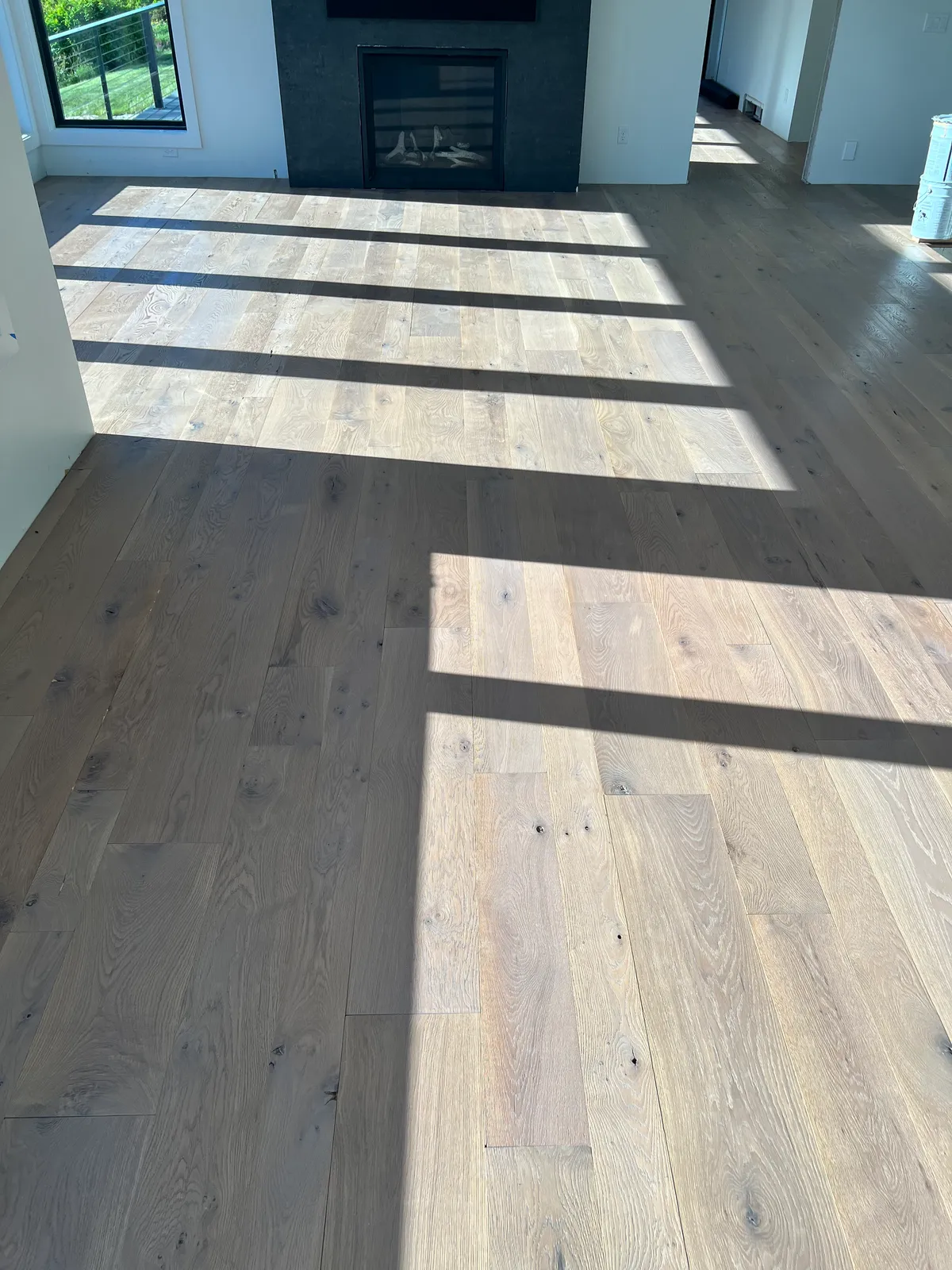
If you are replacing floors with resale in mind, the answer is not just “newer is better.”
Some flooring choices add real value. Some mostly help the house show better. And some upgrades cost more than they are likely to return.
The goal is not to win a flooring debate. The goal is to make the home easier to sell and easier for a buyer to say yes to.
The Short Ranking
For most Utah homes, the ranking looks like this:
1. Hardwood in the main living areas
Hardwood usually has the strongest value signal because buyers see it as a premium, long-term material. It feels established. It reads well in listing photos. It makes the house feel more finished.
This matters most in:
- living rooms
- dining areas
- entries
- main-floor halls
If the house and price point support it, hardwood is the clearest value leader.
2. Engineered hardwood where real wood makes sense but Utah climate matters
This is the version of hardwood we recommend most often in Utah. It still gives you real wood, but it handles our dry air better than solid hardwood and opens up more installation options.
For many homeowners, this is the best blend of resale strength and real-world practicality.
3. Quality waterproof laminate
Waterproof laminate often wins on value-for-money.
It may not get the same premium reaction as real hardwood, but it can still increase value when it replaces stained carpet, cheap old vinyl, or a mismatched mix of dated floors. In mid-range family homes especially, a good laminate floor can make the house feel clean, current, and far easier to move into.
That alone has value.
What Usually Adds the Least
If the goal is resale, these tend to do the least for you:
- cheap glossy wood-look floors that feel temporary
- trendy colors that already feel dated
- carpet in the main living spaces where buyers expect a hard surface
- random room-by-room product changes that break up the house visually
Buyers respond to cohesion. A house that feels thought through almost always lands better than one with a bunch of disconnected choices.
Which Rooms Move the Needle
The best place to spend the flooring budget is where buyers make their first impression.
Highest impact
- entry
- great room
- kitchen-adjacent living space
- main hallway
Medium impact
- primary bedroom
- upstairs hall
- office
Lower impact
- guest bedrooms
- closets
- utility spaces
If the budget is limited, do not chase the whole house. Put the best flooring decision in the rooms that carry the most emotional weight.
Matching the Flooring to the House
The right answer changes by home type.
Starter and move-up homes
Quality waterproof laminate is often the smartest play. Buyers want the home to feel durable, clean, and easy to live with. A realistic wood look with a matte finish usually does more than enough.
Mid-range homes
This is where the conversation gets interesting. Some homes clearly benefit from hardwood. Others are better served by a very strong laminate install through the main floor. The deciding factors are usually:
- what buyers expect in that neighborhood
- how visible the flooring is from the entry
- whether the rest of the finish level supports real wood
Higher-end homes
Hardwood usually wins here. If buyers expect a more premium finish level, laminate can make the house feel like it missed the mark, even if it looks good on its own.
Hardwood vs. Laminate for Value
If you are down to those two, the cleanest answer is this:
Hardwood adds the most value when:
- the house is already operating at a premium finish level
- you are doing the most visible rooms
- resale positioning matters as much as daily durability
Waterproof laminate adds value best when:
- the existing floors are the problem, not the lack of luxury material
- you want the house to feel updated without overcapitalizing
- durability and move-in readiness matter more than prestige
If you want the yes-or-no answer on laminate specifically, read does laminate flooring increase home value.
The Question to Ask Before You Spend
Do not ask, “What is the best flooring?”
Ask:
What flooring makes this specific house easiest to say yes to?
That question usually leads to better decisions because it forces you to look at:
- the price point of the home
- the neighborhood expectation
- the condition of the current floors
- where buyers will notice the change first
Our Honest Recommendation
If resale is the goal:
- choose hardwood when the house supports it and the main-floor presentation matters
- choose waterproof laminate when you need a strong update without premium hardwood cost
- focus on visible, connected spaces first
- skip trendy product choices that can date the house quickly
The best flooring for value is usually the floor that makes the home feel more cohesive, more current, and less like work for the next buyer.
If you want help making that call without guessing from a sample board, we will bring curated hardwood and laminate options to your home, walk the actual rooms, and help you decide what is worth doing.