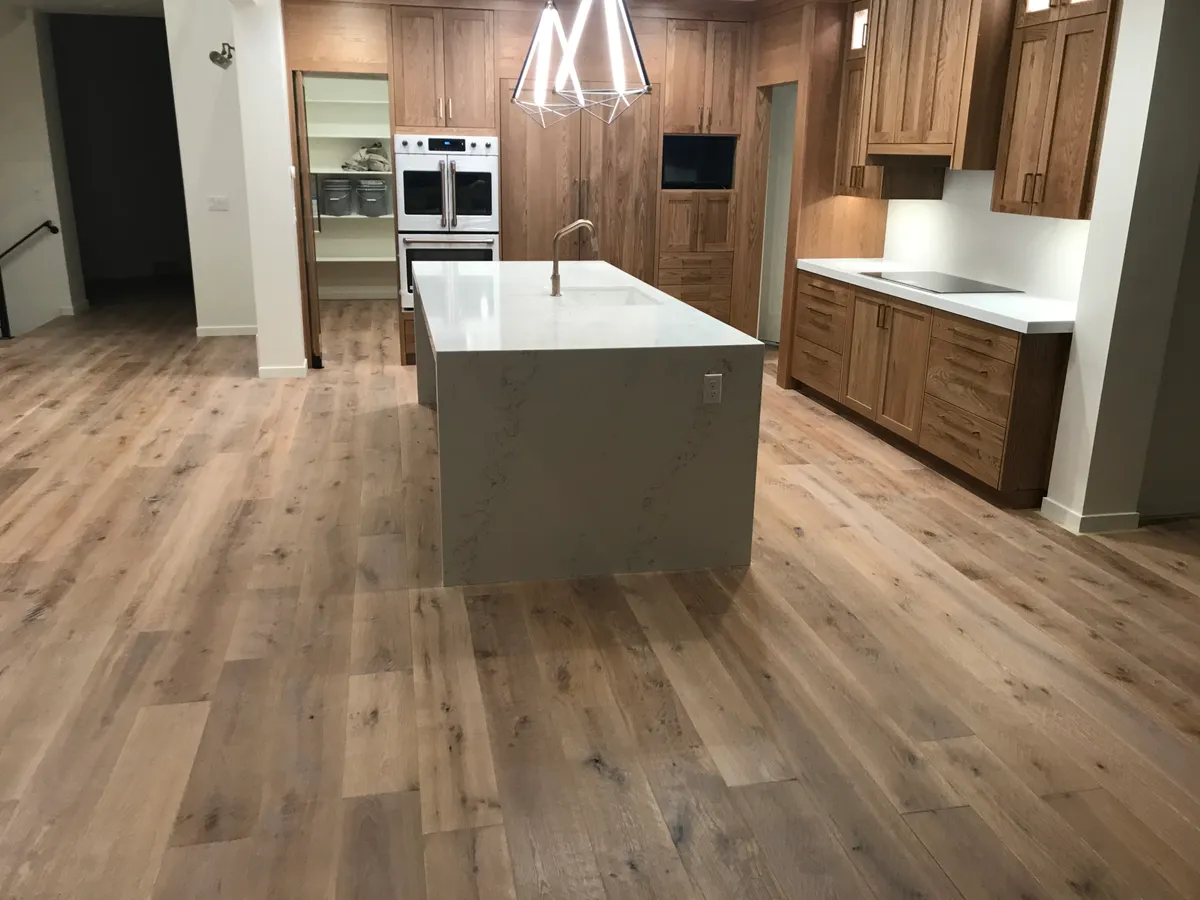
Herriman has gone from a small town on the edge of the valley to one of Utah’s fastest-growing cities in barely a decade. New developments are still going up along the mountain bench, first-time buyers are moving in, and young families are filling neighborhoods that didn’t exist five years ago. Nearby Riverton and South Jordan share a similar growth pattern.
That growth means one thing for flooring: a lot of homes with builder-grade floors that are already showing their age. This guide covers when to upgrade, what to upgrade to, and what Herriman homeowners are actually choosing right now.
Herriman at a Glance
- Population: 65,423
- Home styles: Predominantly new construction (2015–present), single-family subdivisions, some townhome developments
- Common existing flooring: Builder-grade carpet, entry-level laminate (often 6-8 mil wear layer), tile in wet areas
- Climate factors: Slightly higher elevation than the valley floor at around 5,000 feet. Drier air, colder winters, same dramatic humidity swings.
Herriman is essentially a new-construction city. The flooring conversation here almost always starts with the same question: “How long do I live with builder-grade before I upgrade?”
Best Flooring Options
The Builder-Grade Problem
Here’s what happens with new construction flooring. The builder selects products that check three boxes: they’re cheap, they install fast, and they look acceptable on closing day. That’s it. Longevity, comfort, and performance are not part of the equation.
The carpet in most Herriman new builds is the thinnest, lightest-weight product available with a minimal pad beneath it. It photographs fine for the listing. It feels fine during your walkthrough. Then you move in, and within 18–24 months the traffic patterns are visible, the padding has compressed, and it looks five years old.
The laminate situation is similar. Builder-grade laminate typically has a 6-mil wear layer, sometimes even thinner. For reference, we recommend 12-mil minimum for living areas and 20-mil if you have dogs. A 6-mil wear layer will scratch from normal furniture movement and show wear paths within a couple of years.
When to Upgrade
You have two smart windows:
Before you move in. If you’re buying new construction and the builder offers a flooring upgrade package, compare their pricing to what you’d pay an independent installer. Sometimes the builder markup is reasonable. Often it’s not. Either way, getting the right floor down before your furniture goes in saves the hassle of moving everything later.
Within the first 2–5 years. Most Herriman homeowners hit a point where the builder carpet is clearly done and the main-level laminate is scratched enough to bother them. This is the natural upgrade window. You’ve lived in the home long enough to know which rooms get the most traffic and what your actual needs are.
What to Put Down
Main living areas, engineered hardwood or premium laminate:
For open-concept Herriman floor plans (which is most of them), you want one continuous floor from the entryway through the kitchen and great room. Engineered hardwood in white oak gives you a high-end look that adds resale value. Premium laminate with a 20-mil wear layer and SPC core gives you waterproof durability that handles spills, muddy boots, and toy cars without flinching.
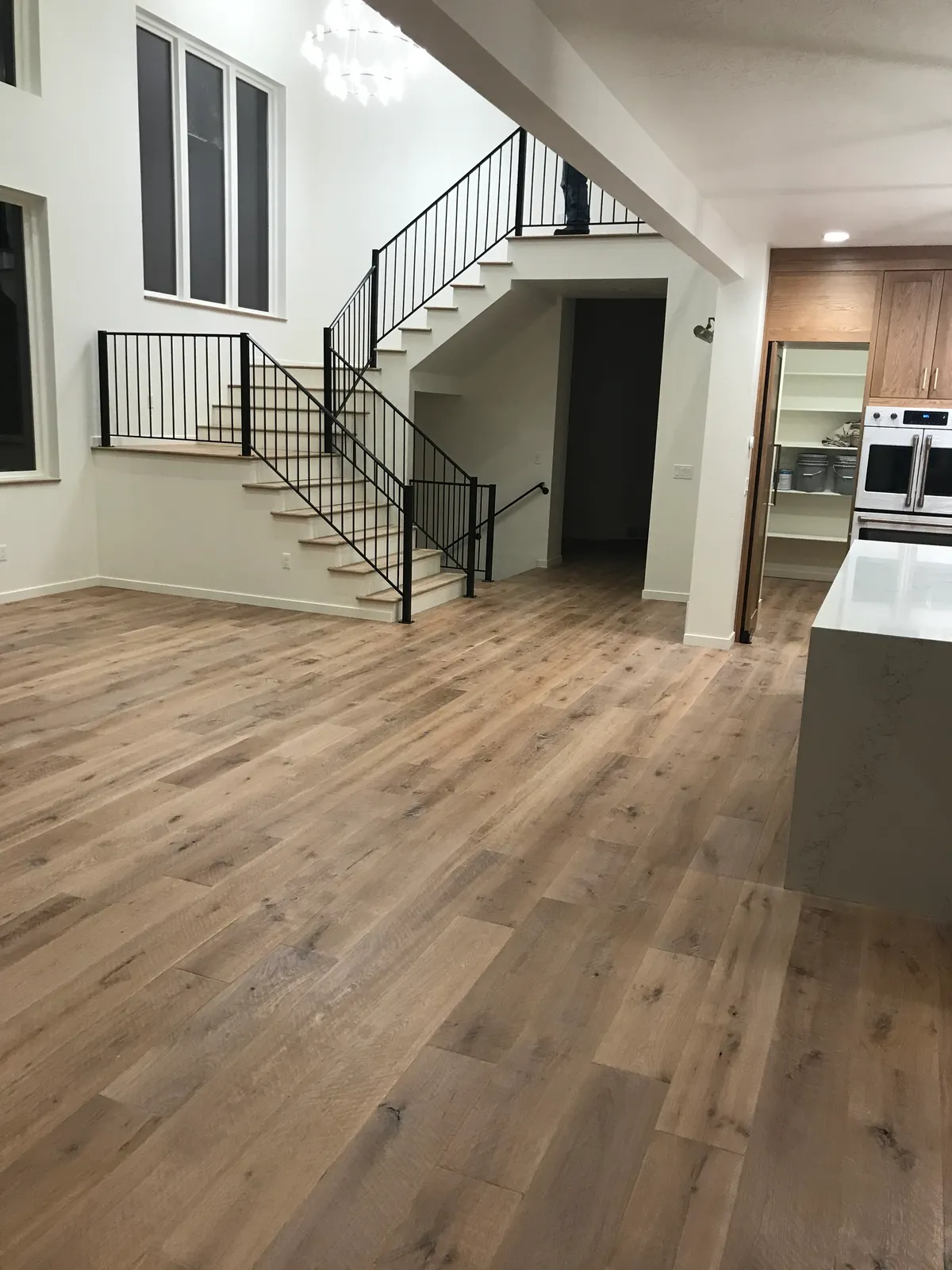
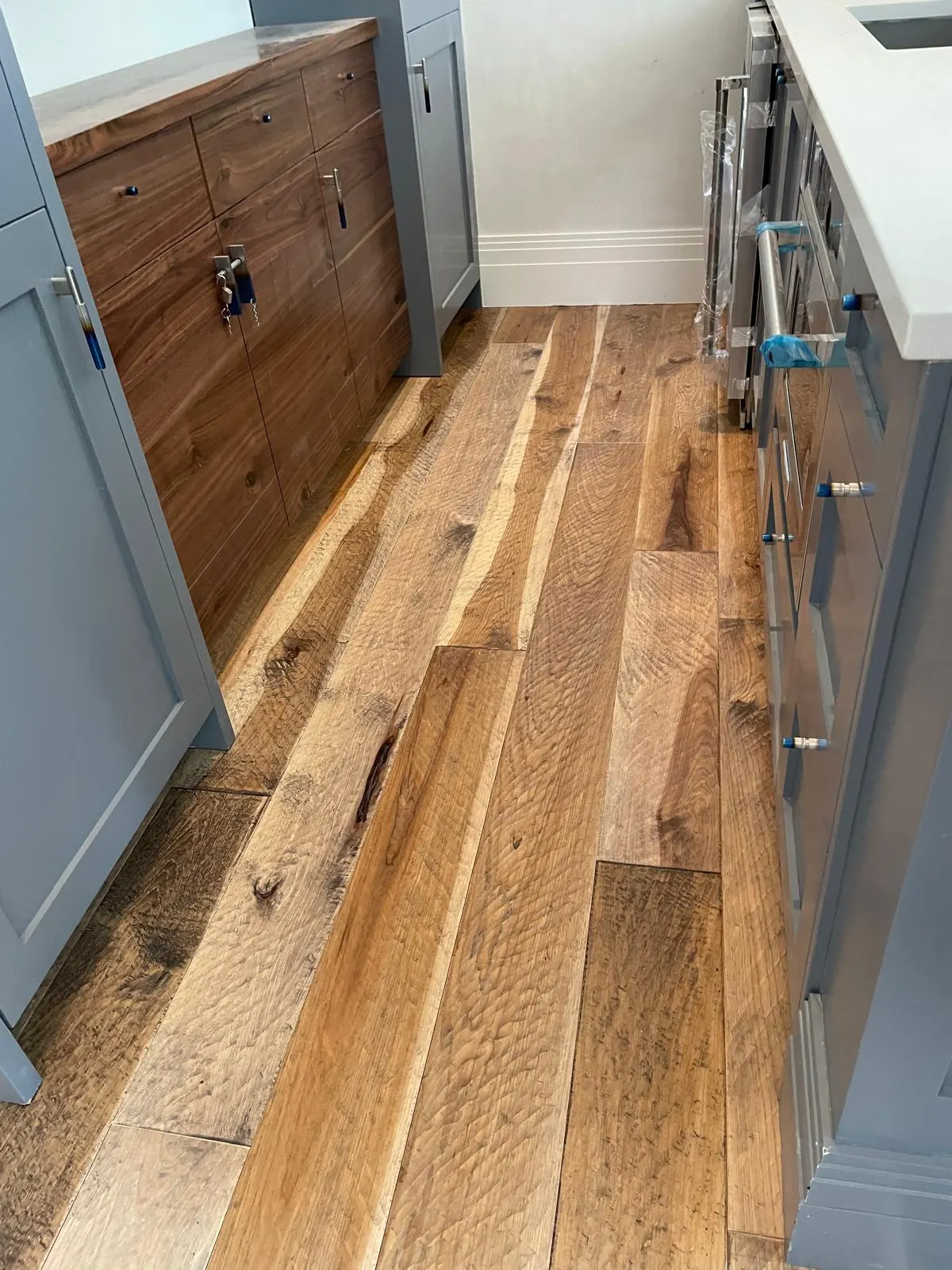
Both options run well in Utah’s dry climate. Engineered hardwood handles humidity swings because of its layered construction. SPC-core laminate doesn’t react to humidity at all. Either is a massive upgrade from what your builder put in.
Bedrooms, laminate, engineered hardwood, or quality carpet:
Bedrooms are lower traffic, so you have flexibility. Match the main level for a cohesive look, or put in quality carpet with a thick pad if you want warm, soft floors in the rooms where you walk barefoot. If you go carpet, invest in a good pad; that’s what determines how carpet feels and how long it lasts. The carpet itself is secondary.
Basements, laminate exclusively:
Herriman basements sit on concrete slabs. Concrete transmits moisture vapor even when it feels dry. Laminate with an SPC core is waterproof and doesn’t care about that moisture. It’s the only flooring we’d recommend for any basement in the Salt Lake Valley. Our Utah basement flooring guide covers this in detail.
Kitchens and bathrooms, laminate or tile:
Water zones need waterproof floors. Laminate is the easier, faster, and usually cheaper option. Tile is the traditional choice and works great. Just budget more for installation.
Herriman-Specific Considerations
Growing Families Need Tough Floors
The median age in Herriman skews young. That means toddlers, school-age kids, dogs, and the kind of daily activity that tests flooring constantly. Toy cars, spilled juice, muddy cleats by the back door, the dog’s nails on the kitchen floor. Your flooring has to handle all of it without showing every incident.
This is where laminate earns its reputation. A 20-mil SPC-core laminate takes daily abuse from a family of five and still looks clean at the end of the week. Engineered hardwood is more beautiful but shows scratches from dog nails more readily. Choose a wire-brushed or distressed finish if you go hardwood with pets. The National Wood Flooring Association recommends textured finishes for pet-friendly homes because those textures hide minor scratches naturally.
Higher Elevation, Drier Air
Herriman sits higher than most of the valley, which means slightly drier air year-round and colder winters. That’s tough on any wood-based flooring. Solid hardwood is risky here: the seasonal gap cycle is more pronounced at elevation. Stick with engineered hardwood or laminate for a floor that stays stable through January’s 10% humidity and July’s monsoon bumps.
For more on how Utah’s climate affects flooring choices, read our climate flooring guide.
New Development Subfloors
One advantage of Herriman’s newer construction: your subfloors are almost certainly in good shape. Newer homes have level concrete in basements and clean OSB or plywood on upper levels. That means less subfloor prep during installation, which keeps your project cost down. In older parts of the valley, subfloor repair can add hundreds to a project. In Herriman, it’s rarely an issue.
What Homeowners Are Choosing
The trends we’re seeing in Herriman installs right now:
-
Most popular product: Wide-plank laminate with a 20-mil wear layer in a light oak tone. It’s the sweet spot of durability, looks, and price for Herriman’s demographic, young families who want something that looks great and can take a beating.
-
Premium choice: Engineered white oak hardwood on the main level with laminate in the basement. This is the setup we see in homeowners who are planning to stay long-term and want that real-wood warmth in their primary living space.
-
Budget-smart move: Replacing builder carpet on the main level with quality laminate and leaving basement carpet for a later phase. This gets the highest-impact upgrade done first without stretching the budget across the whole house.
-
Style direction: Light and natural tones dominate. The dark espresso floors from ten years ago are out. Herriman homeowners want bright, airy spaces. light oak, blonde maple, and warm gray tones are what people are choosing.
The universal theme: nobody in Herriman wants to babysit their floors. Whether you’re spending $5 or $12 per square foot installed, you want to put it down and not think about it while your kids grow up on it. If you’re weighing the two most popular options, our hardwood vs. Laminate guide walks through the trade-offs.
For installed pricing across all these categories, check our 2026 flooring cost guide.
See the Difference in Your Own Home
Builder-grade flooring was someone else’s choice for your house. Let’s make it yours. We bring curated samples to your Herriman home so you can see real options in your actual space. Your lighting, your walls, your layout.