Spanish Fork at a Glance
Spanish Fork is one of south Utah County’s fastest-growing cities, pushing past 44,000 residents and showing no signs of slowing down. What makes this city interesting from a flooring perspective is the mix. You’ve got established neighborhoods from the 1990s and early 2000s (places like River Bottoms, Canyon Creek, and Maple Mountain Estates) alongside brand-new communities still going vertical on the south and west sides of town. Nearby Springville and Payson share similar housing profiles.
That means two very different flooring conversations happen here. In newer homes, it’s about upgrading builder-grade carpet and basic vinyl. In older homes, it’s about replacing flooring that’s done its job for 20-plus years. Either way, Spanish Fork homes are well-suited for modern upgrades, mostly single-family, mid-$400s median price, and homeowners who want floors that look good, hold up, and don’t blow the budget.
Best Flooring Options for Spanish Fork Homes
Laminate: The Smart Default
For the majority of Spanish Fork homes, waterproof laminate is the right call. It handles everything this city throws at it: kids, pets, muddy boots from the canyon trails, and the seasonal humidity swings that come with living along the Wasatch Front.
In newer construction, laminate replaces builder-grade flooring seamlessly. The open floor plans in Spanish Fork’s new communities are built for continuous flooring, one product running from the front door through the kitchen and living room without transitions. In 1990s and 2000s-era homes, the install involves more prep, pulling up old carpet, sometimes tile, and leveling subfloor imperfections, but the result is equally transformative.
We recommend a rigid-core SPC product with a 20-mil wear layer for any Spanish Fork home. It’s the sweet spot of durability, comfort, and value.
Engineered Hardwood: The Upgrade Worth Considering
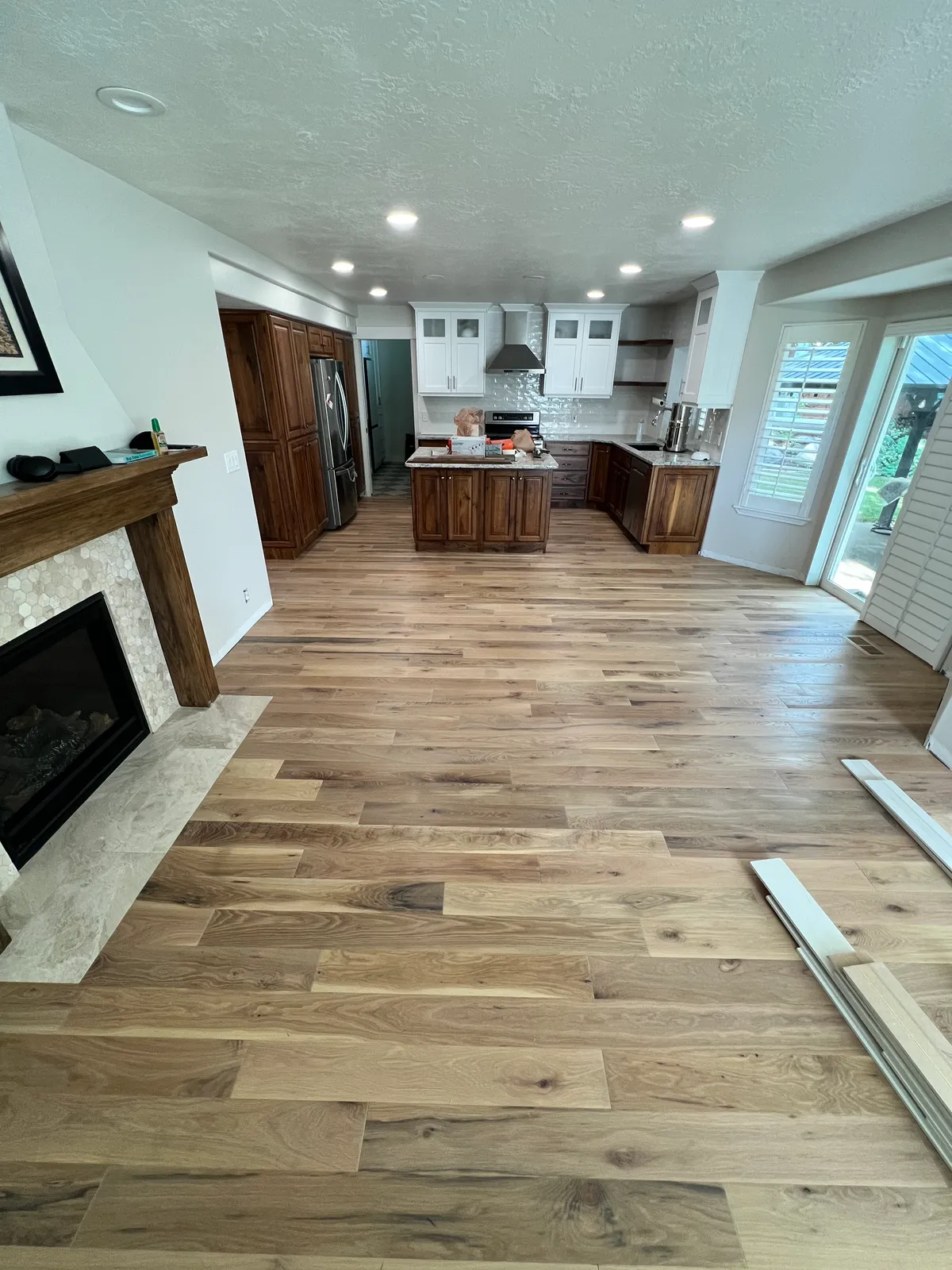
If you want real wood on your main floor, engineered hardwood is the way to go. A wide-plank white oak or hickory elevates any home, especially the 90s-era builds where the original flooring was carpet over plywood.
Go engineered, not solid. Spanish Fork sits at about 4,600 feet with dry winters that push indoor humidity well below 30%. Solid hardwood gaps in those conditions. Engineered construction stays stable. We covered this in our Utah climate flooring guide.
The smart play: run engineered hardwood through the great room, dining area, and entry, then transition to laminate in the kitchen, bathrooms, mudroom, and basement.
Spanish Fork-Specific Considerations
Walk-out basements are everywhere here. The terrain on the east side near the foothills lends itself to walk-out designs, and these basements get used as real living space. Laminate is the only product we recommend below grade. Even in walk-outs where part of the basement is above grade, the concrete slab still transmits moisture vapor. Carpet absorbs it and gets musty. Laminate handles it.
South county clay soil matters. The soil here tends toward heavy clay, which expands when wet and contracts when dry. The EPA recommends moisture testing for any below-grade installation. This can introduce moisture at the slab level. It doesn’t mean your basement will flood. It means proper moisture testing before installation is essential. We always test basement concrete before recommending a product and underlayment combination.
Builder-grade carpet in new communities. If you bought new construction within the last five years, your carpet is probably a 25-oz polyester that’s matted by year two. That’s not a defect; it’s how production builders operate. Replacing it with laminate is one of the highest-ROI improvements you can make, and newer subfloors are typically clean and level, keeping installation fast.
Dust from ongoing construction. With all the development in Spanish Fork, airborne dust settles on everything. Textured laminate and wire-brushed hardwood hide dust better than smooth or high-gloss finishes, worth considering when picking a texture.
What Spanish Fork Homeowners Are Choosing
The most common project we do here is a whole-home laminate installation, pulling up carpet on the main floor and upstairs, then continuing into the basement. One floor, one color, wall to wall. It transforms the house.
Color trends lean warm and natural, consistent with broader 2026 flooring trends. Medium-toned oak, warm greige, and light hickory are the top picks. The cool gray trend has faded in favor of warmer tones that feel natural against neutral paint palettes.
For homeowners with more budget, the hardwood-laminate combination is increasingly popular, engineered white oak on the main living areas, laminate everywhere else. Our flooring cost guide breaks down the numbers if you’re comparing options.
See Flooring in Your Spanish Fork Home
The sample that looked perfect under showroom lights can read completely different in your living room with afternoon sun through the west-facing windows. Spanish Fork’s light is strong and directional. It changes how every color and texture shows up.
We bring the showroom to you. Curated samples, professional measurement, and a firm quote, all in your home, no pressure, no follow-up sales calls.
Book a free in-home consultation →