Lehi at a Glance
Lehi has become two cities in one. On the east side, Traverse Mountain and the Northridge communities are full of newer construction, large homes, modern floor plans, and homeowners who moved in during the Silicon Slopes tech boom. On the west side and through downtown, you’ve got established neighborhoods with homes dating back to the 1960s through the 1990s, many of which are due for a serious refresh.
With a population above 85,000, Lehi is one of the largest cities in Utah County. The tech corridor has brought in higher-income professionals who care about design, but Lehi isn’t just tech money, plenty of longtime residents in established neighborhoods want to modernize without overbuilding for the area.
Traverse Mountain homes tend to be 2010s-era and newer with open floor plans and builder-grade finishes ripe for upgrading, similar to what we see in Eagle Mountain and Saratoga Springs. Downtown Lehi and older neighborhoods have smaller footprints and renovation considerations that newer homes don’t deal with.
Best Flooring Options for Lehi Homes
The right recommendation depends on which Lehi you live in.
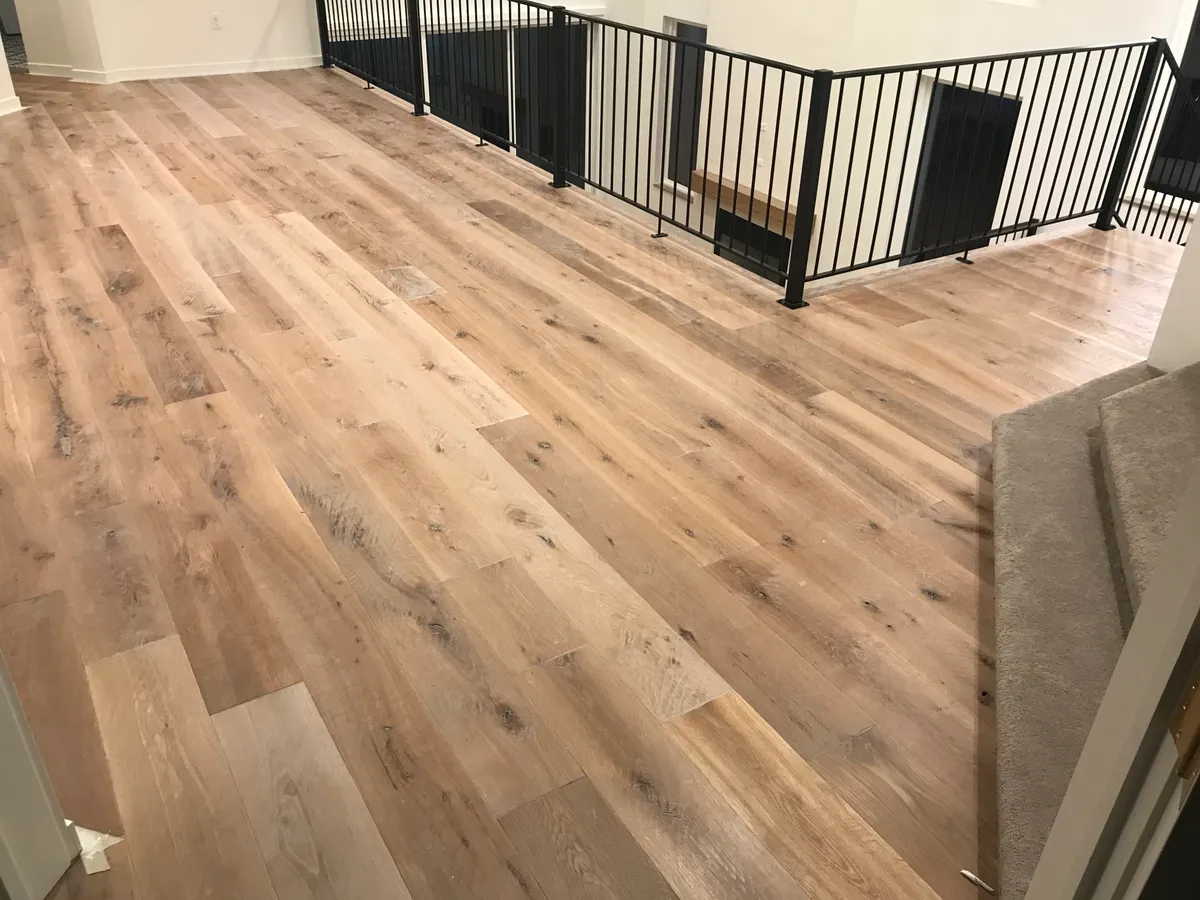
For Traverse Mountain and newer communities: Engineered hardwood is the strongest recommendation for main living areas. These homes have the square footage, the ceiling heights, and the design sensibility where real wood makes a visible difference. White oak in a wide plank with a matte or wire-brushed finish is what we install most in this part of town. The National Wood Flooring Association rates white oak as one of the most durable domestic species for residential use. Pair it with laminate in the kitchen, mudroom, bathrooms, and basement for a cohesive look with practical performance where it matters.
For downtown Lehi and older neighborhoods: laminate is often the smarter starting point. Homes from the 1970s through the 1990s come with uneven subfloors, broken-down carpet padding, and sometimes outdated tile that needs to come up first. Laminate handles subfloor imperfections better than hardwood, installs faster, and delivers a dramatic visual upgrade at a lower price point. Our hardwood vs. Laminate comparison breaks down when each option makes sense.
That said, if you’re doing a full renovation on an older Lehi home and the subfloors are in good shape, engineered hardwood on the main floor is absolutely worth considering.
Lehi-Specific Considerations
Two different subfloor situations. Newer homes in Traverse Mountain typically have clean subfloors ready for installation. Older homes near downtown might have multiple layers of existing flooring or subfloors that need leveling. We assess this during every consultation. It affects product choice and cost.
Dry climate, high altitude. The same dry climate considerations that apply across the Wasatch Front apply here. Solid hardwood gaps in winter. Engineered hardwood handles it. Laminate doesn’t care. If you’re choosing hardwood, go engineered, especially at the higher elevations in Traverse Mountain.
Open floor plans demand continuity. Your flooring choice shows everywhere at once in an open layout. Running one product, or two complementary products, across connected spaces creates visual flow. Random transitions between carpet, tile, and mismatched flooring chop a space up.
Basement finishing is huge in Lehi. If you’re finishing yours, plan the flooring from the start. Laminate is the right call below grade, waterproof, stable, and comfortable. Choose a product that coordinates with your main-floor hardwood and the transition between levels feels seamless.
What Lehi Homeowners Are Choosing Right Now
In Traverse Mountain and Northridge, the most popular project is engineered hardwood on the main floor with laminate everywhere else. European white oak dominates, warm, modern, and versatile enough to work with both the Mountain Contemporary and transitional styles that are popular up the hill. Homeowners in this price range are also increasingly choosing wider planks (7” to 9”) and low-sheen finishes. The high-gloss look has been out for years.
In older Lehi neighborhoods, whole-home laminate replacements are the bread and butter. Homeowners are pulling out 20-year-old carpet and dated tile and replacing everything with a single laminate product. The transformation is significant. These projects routinely change how a home feels, and they’re one of the best returns on investment you can get in a mid-range renovation.
Color-wise, natural tones are in. Honey oak, warm grey, and light walnut are the top sellers. The cool grey trend has faded, people want warmth without going too dark.
We’re transparent about what flooring actually costs. Whether you’re outfitting a Traverse Mountain custom home or updating a starter home near downtown, we’ll give you a clear number during the consultation.
See Flooring in Your Lehi Home Before You Buy
Lehi is a long city, from the Traverse Mountain exit to Main Street is a real drive, and the last thing you want is to spend a Saturday at a flooring showroom only to realize the sample you loved doesn’t work in your space. Light, wall color, cabinet finishes. they all affect how a floor looks, and you can’t replicate your home’s conditions under showroom lighting.
We bring the showroom to you. We’ll show up with curated samples that match your style, measure your space, and walk through your options in real time. You get a firm quote before we leave. No waiting for a callback, no hidden costs.
Whether you’re upgrading a Traverse Mountain new build or breathing new life into a downtown Lehi home, it starts with a 45-minute consultation at your kitchen table.
We bring the showroom to Lehi. Book a free consultation →