Best flooring for stairs in Utah | Salt Lake County installer guide
If you searched “best flooring for stairs in Utah,” you want a recommendation that survives grit, salt, dry winters and older home treads. This Salt Lake County–focused installer guide walks Utah homeowners through the practical choices—carpet, LVP, engineered hardwood, and laminate—and the on‑site checks a real installer should do. We’re Plank & Go: we bring samples, test them on your stairs, and leave a written plan with every Free In‑Home Floor Fit Consultation.
Quick answer — choose by use and exposure
- Safety / quiet (kids, seniors, bedrooms): full‑width carpet or a full‑depth carpet runner.
- Mud, salt, garage/entry traffic: textured LVP with a matched stair‑nose.
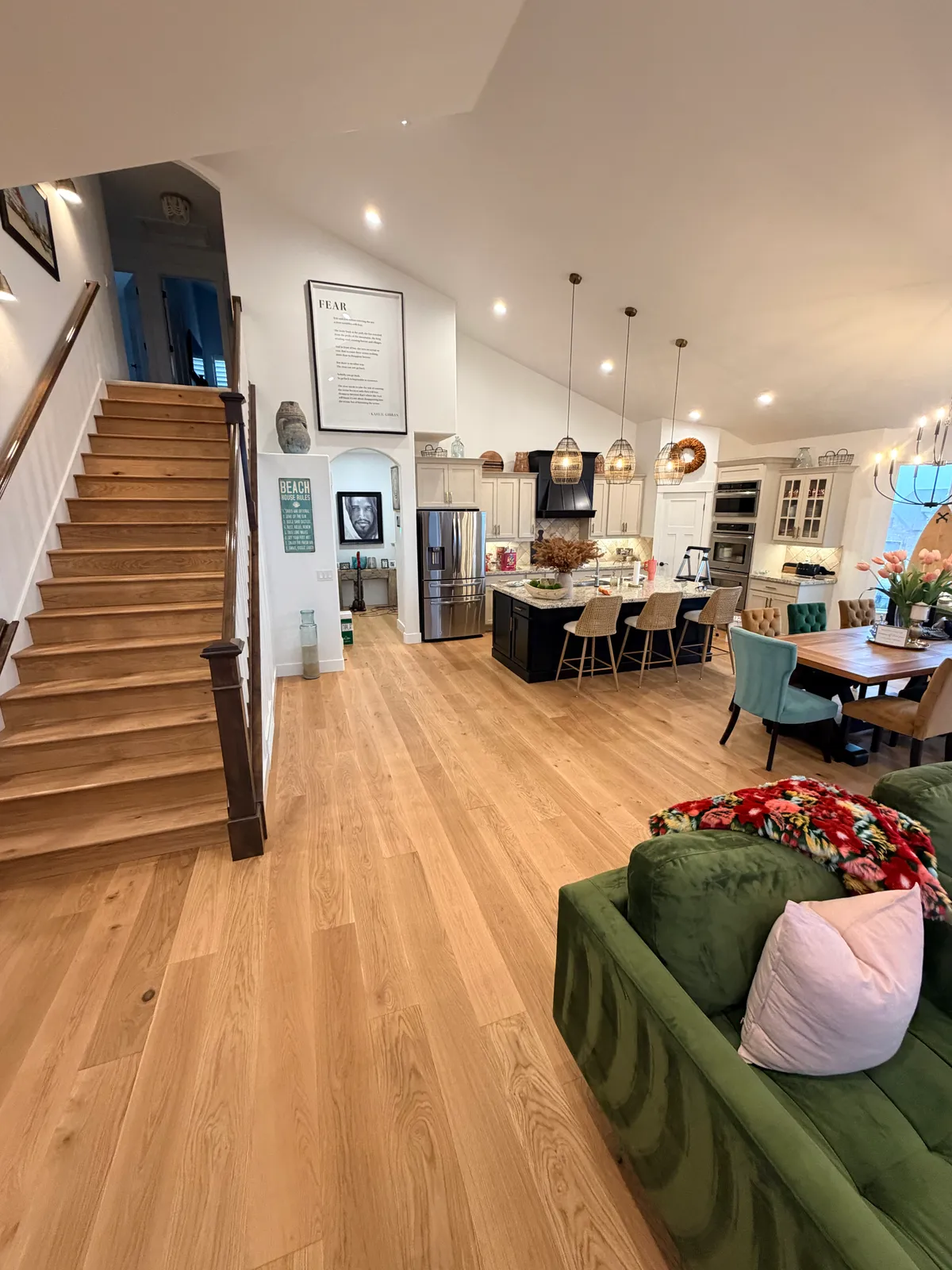
- Showpiece/open two‑story stairs: engineered hardwood (use a runner on the highest‑wear treads).
- Tight budget: laminate only if the manufacturer supplies a full stair‑nosing system and your installer has stair experience.
Use this page as a decision checklist you can bring to your in‑home consult — it shortens the quote and keeps surprises low.
Why Utah stairs need product + installer attention
Stairs concentrate wear at the nosing — the exact spot where grit, salt and boots hit first. Local details that matter:
- Dry summers and trail use track gritty sand into homes across Salt Lake and Davis counties.
- Winter salt and wet shoes around garage entries and mudrooms speed nose wear and discoloration.
- Big humidity swings and older framing common in Weber and Salt Lake counties cause movement and squeaks.
Material choice matters, but installation matters more: correct stair‑nose, proper fastening/adhesive, and subfloor fixes stop squeaks and premature failures.
County callouts — practical fixes we bring to the job
- Salt Lake County (Salt Lake City, Sandy, Murray, South Jordan): high family and pet traffic. Typical fix: LVP or engineered hardwood with a heavy runner for high‑use treads.
- Davis County (Layton, Farmington, Kaysville): more basement entries; use waterproof LVP on basement/garage stairs and carpet upstairs for sound control.
- Weber County (Ogden, Roy): many older, uneven treads; plan for sistering treads or adding blocking before finishing.
- Summit County / Park City: curved, custom stairs and higher labor; allow extra time and budget for templates and custom nosing.
Material breakdown — what actually works here
Carpet
- Pros: best traction, quiet, forgiving for falls — ideal for bedrooms and second‑floor runs.
- Cons: traps grit and salt on entry stairs; needs more frequent cleaning.
- Utah tip: short‑pile, dense fibers for entry runners; consider stain‑resistant fibers if kids/pets track in outdoor debris.
LVP (Luxury Vinyl Plank)
- Pros: waterproof options, easy to clean, durable; many manufacturers offer matched stair‑noses.
- Cons: some low‑end LVP has undersized or mismatched nosing and can be slick when wet.
- Utah tip: choose textured, low‑gloss LVP and confirm the manufacturer stair‑nose matches plank thickness. Always test a sample on your tread.
Engineered hardwood
- Pros: premium look, ties open stairs to living areas, better stability than solid in Utah’s dry climate.
- Cons: more expensive; the nosing sees heavy wear and may need a runner depending on traffic.
- Utah tip: prefer engineered planks with a plywood core and a harder species (white oak, for example). For open two‑story stairs, add a runner on the most used treads.
Laminate
- Pros: economical and good visual match at lower cost.
- Cons: many systems lack a full stair‑nosing solution; edges and nosing take most abuse.
- Utah tip: use laminate only when the manufacturer offers a full stair system (nose + bullnose) and you hire an installer experienced with stair transitions.
Room‑by‑room short picks
- Basement stairs: LVP — best for moisture resistance. Carpet only if humidity is controlled.
- Entry / garage stairs: textured LVP or a heavy runner; plan for frequent cleaning and aggressive nosing.
- Open two‑story stairs: engineered hardwood for appearance; add a runner where traffic concentrates.
- Bedroom stairs: carpet for comfort and sound dampening.
What a good Salt Lake County installer will inspect (and put in writing)
- Subfloor and tread stiffness — reinforce or sister treads before finishing if needed.
- Stair‑nose compatibility — confirm the nose matches plank thickness and profile.
- Fastening + adhesive plan — open stairs often need mechanical fasteners plus adhesive; floating floor solutions require special nosing details.
- Transitions and landings — plan bullnose and trim to avoid gaps and tripping hazards.
- On‑site sample test — lay a sample on your actual tread, try it with shoes/pets and in your light.
Tell your installer who uses the stairs most (kids, elderly, pets, boots) and whether the stairs see outdoor traffic. That shortens the estimate and avoids surprises.
Common mistakes we fix on Utah jobs
- Buying glossy or smooth planks for entry stairs that become slippery when wet.
- Installing flooring without a matched stair‑nosing or full stair system.
- Treating stairs like flat floors — ignoring nosing, riser detail and fastening rules.
- Skipping subfloor checks on older homes; hidden repairs add time and cost.
How we price a stair project (what you’ll see on the written estimate)
We break the quote into the same line items you should expect to see on any professional estimate:
- Scope: number of stairs, open vs closed stringers, landings and curved treads.
- Materials: exact plank SKU, stair‑nose or bullnose SKU, adhesives and fasteners.
- Prep: tread sistering, blocking, or replacing treads if required.
- Labor: time for templates and custom nosing on curved stairs (higher in Summit/PC).
Typical local ranges per stair (local variance applies):
- Carpet: $35–$75 per stair
- LVP: $65–$120 per stair
- Laminate (full stair system): $60–$100 per stair
- Hardwood (engineered / solid): $100–$220+ per stair
Note: Summit / Park City and curved stairs typically run higher because of travel, templates and custom nosing.
Short decision checklist for Utah homeowners
- Who uses these stairs? Prioritize traction for kids/elderly/pets.
- Are stairs exposed to outdoor boots/salt? Favor textured LVP or a heavy runner.
- Is the stair a design focal point? Engineered hardwood wins looks; add a runner for heavy use.
- Verify there’s a matched stair‑nosing or a full stair system before buying flooring.
- Budget for potential subfloor repairs on older homes — ask the installer to confirm in writing.
Ready to decide? What we do on a Free In‑Home Floor Fit Consultation
We bring real samples, test them on your stairs with your shoes and pets, inspect treads and subfloor, confirm stair‑nose compatibility, and leave a written, no‑pressure estimate that includes landings and transitions. No surprises — just a practical plan so your stairs are safe, quiet and durable.
Book a Free In‑Home Floor Fit Consultation and we’ll walk your stairs, test nosing options in your light, and deliver a firm written plan.